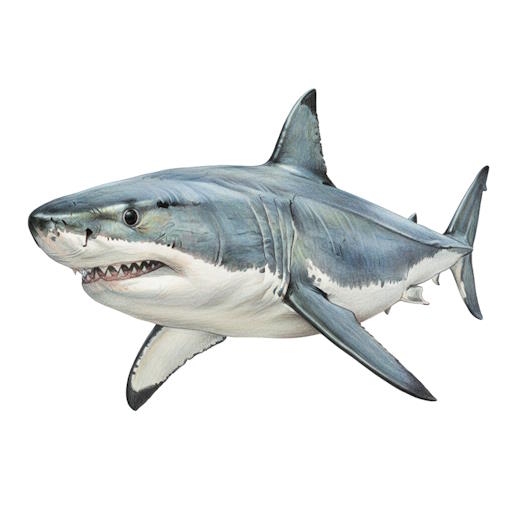
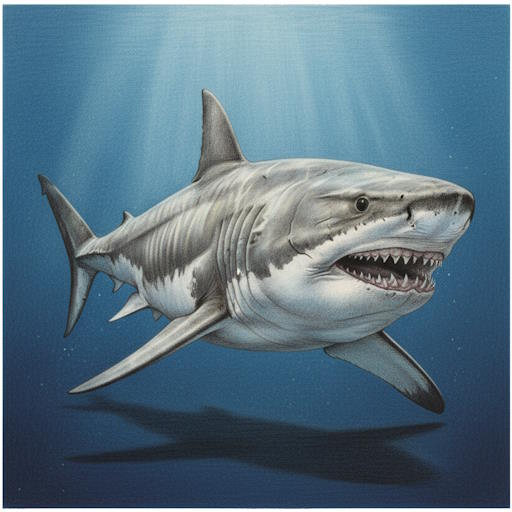
Animal Order: Lamniformes
The parent class for the order of Lamniformes is Chondrichthyes.
The order Lamniformes, commonly known as mackerel sharks, to be one of the most apex and uniquely adapted groups of cartilaginous fish within the animal kingdom. What truly sets them apart is their extraordinary specialization for active, pelagic predation, embodying a suite of physiological and anatomical features that make them formidable hunters of the open ocean.
One of the most defining characteristics of Lamniformes is their remarkable homeothermy or regional endothermy. Unlike most other fish, many members of this order, such as the Great White Shark (Carcharodon carcharias) and the Mako Shark (Isurus oxyrinchus), can maintain a body temperature higher than the surrounding water. This unique adaptation, facilitated by a specialized vascular counter-current heat exchange system called the rete mirabile, allows them to sustain higher metabolic rates. This translates to increased muscle power and faster swimming speeds, essential for pursuing fast-moving prey and expanding their hunting grounds into colder waters, a feat rarely achieved by other marine predators.
Beyond their thermoregulatory prowess, Lamniformes possess a highly streamlined, fusiform body shape optimized for speed and agility. Their crescent-shaped caudal fins provide powerful propulsion, while their large pectoral fins act as efficient hydrofoils, allowing for precise maneuverability. Their dentition is equally impressive and highly diverse, ranging from the massive, serrated teeth of the Great White, perfectly suited for tearing flesh, to the long, slender teeth of the Mako, designed for grasping slippery fish. This dental specialization reflects the varied predatory strategies within the order, yet all are exceptionally adapted for their roles as top predators.
Furthermore, many Lamniformes exhibit unique reproductive strategies, including ovoviviparity and even oophagy (in-utero egg eating) or adelphophagy (embryo cannibalism in utero), ensuring the development of large, robust pups with a head start in survival. This investment in fewer, more developed offspring underscores their evolutionary success as highly efficient hunters in competitive marine environments. The combination of advanced thermoregulation, hydrodynamic efficiency, specialized dentition, and unique reproductive strategies collectively establishes Lamniformes as unparalleled predators and truly unique inhabitants of the world's oceans.
Other Orders
There are many different orders based upon their class. To learn more about classification orders, click here.
Families within Lamniformes
Within the order of Lamniformes, there are one or more families of animals that share common characteristics and traits.
Each family represents a more specific grouping within the order, highlighting the diversity and specialization of species that have adapted to various ecological niches. Below is a list of families that fall under this order, showcasing the rich variety of life forms classified within this taxonomic category.
Animals in the order of Lamniformes
Click on an image to learn more about one of the animals.