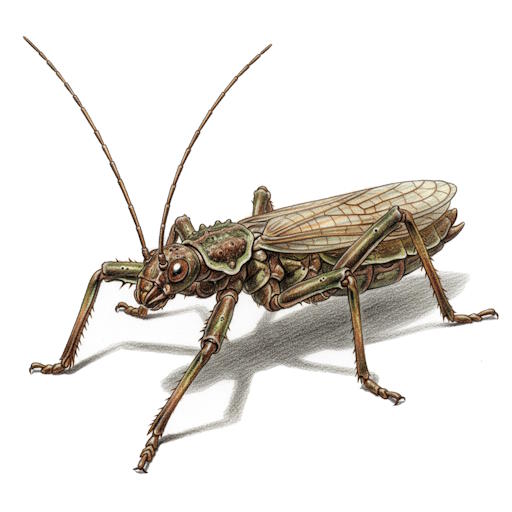
Animal Order: Phasmatodea
The parent class for the order of Phasmatodea is Insecta.
As a biologist specializing in zoology, few insect orders captivate me as much as Phasmatodea, the remarkable group commonly known as stick insects and leaf insects. What truly sets these masters of camouflage apart in the animal kingdom is their unparalleled evolutionary dedication to mimicry. They are the ultimate biological illusionists, blending seamlessly into their arboreal environments to evade predators, a specialization virtually unmatched in its perfection.
The uniqueness of Phasmatodea is rooted in their extraordinary morphology, which has evolved to flawlessly replicate plant matter. Their bodies are elongated and twig-like, often adorned with nodes, bark-like textures, and even leaf vein patterns. Some species possess flattened, leaf-shaped bodies, complete with serrated edges and coloration that perfectly matches foliage, making them virtually indistinguishable from their surroundings. This phytomimicry extends beyond shape and color; many phasmids exhibit behavioral adaptations like swaying gently to mimic branches in the wind, or freezing in place when disturbed, further enhancing their illusion.
Beyond their iconic mimicry, phasmids display several other fascinating adaptations. Many species are parthenogenetic, meaning females can reproduce without male fertilization, leading to populations that are exclusively female. Their eggs are often camouflaged to resemble seeds, sometimes even possessing a cap (capitulum) that attracts ants, which then carry the eggs to their nests, unknowingly aiding in dispersal. This unique reproductive strategy, coupled with their incredible defense mechanisms, has allowed Phasmatodea to diversify into over 3,000 species across tropical and subtropical regions worldwide, occupying a unique ecological niche as cryptic herbivores. Their singular commitment to appearing as "part of the plant" makes Phasmatodea a truly exceptional and intriguing order within the vast tapestry of animal life.
Other Orders
There are many different orders based upon their class. To learn more about classification orders, click here.
Families within Phasmatodea
Within the order of Phasmatodea, there are one or more families of animals that share common characteristics and traits.
Each family represents a more specific grouping within the order, highlighting the diversity and specialization of species that have adapted to various ecological niches. Below is a list of families that fall under this order, showcasing the rich variety of life forms classified within this taxonomic category.
Animals in the order of Phasmatodea
Click on an image to learn more about one of the animals.