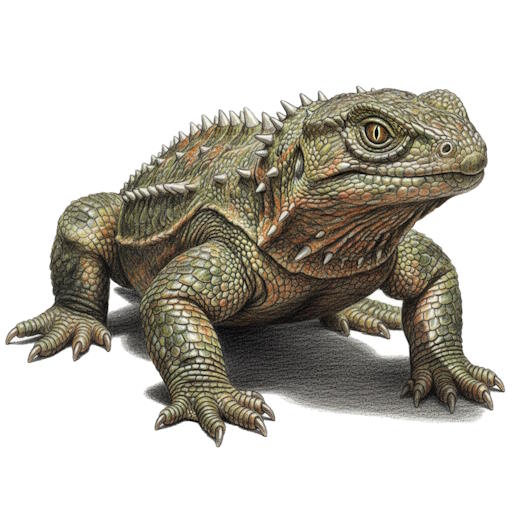
Animal Order: Rhynchocephalia
The parent class for the order of Rhynchocephalia is Reptilia.
As a zoologist, few groups in the animal kingdom are as captivating and uniquely significant as the order Rhynchocephalia. This ancient lineage, represented today by a single genus, Sphenodon, which includes the remarkable tuataras of New Zealand, holds a special place in evolutionary biology. What truly sets Rhynchocephalia apart is its status as the sole surviving order within the ancient reptile group Lepidosauria, a lineage that once thrived alongside early dinosaurs and represents a sister group to all modern lizards and snakes (order Squamata). This makes tuataras living fossils, offering an unparalleled window into the reptilian past.
The distinctiveness of tuataras extends to their anatomy. One of their most iconic features is the presence of a well-developed parietal eye, or "third eye," on the top of their head. While not used for vision, this photosensitive organ plays a crucial role in regulating circadian and seasonal rhythms, a primitive trait largely lost in other living reptiles. Their unique dentition, with teeth fused to the jawbone (acrodont), also distinguishes them, contrasting with the replaceable teeth found in many other reptiles. Furthermore, their skull structure retains primitive features, including a diapsid skull with two temporal fenestrae, but without the kinetic modifications seen in lizards and snakes, indicating a more ancestral condition.
Beyond their morphology, tuataras exhibit a suite of unusual physiological and ecological adaptations. They thrive in cooler temperatures than most reptiles, boasting a remarkably low optimal body temperature, which contributes to their slow metabolism and exceptionally long lifespan—they can live for over 100 years. Their nocturnal activity, coupled with a unique symbiotic relationship with burrowing seabirds, further highlights their specialized niche within their ecosystem. These combined anatomical, physiological, and ecological distinctions firmly establish Rhynchocephalia as a truly unique and invaluable component of Earth's biodiversity, a testament to enduring evolutionary success against the backdrop of deep time.
Other Orders
There are many different orders based upon their class. To learn more about classification orders, click here.
Families within Rhynchocephalia
Within the order of Rhynchocephalia, there are one or more families of animals that share common characteristics and traits.
Each family represents a more specific grouping within the order, highlighting the diversity and specialization of species that have adapted to various ecological niches. Below is a list of families that fall under this order, showcasing the rich variety of life forms classified within this taxonomic category.
Animals in the order of Rhynchocephalia
Click on an image to learn more about one of the animals.