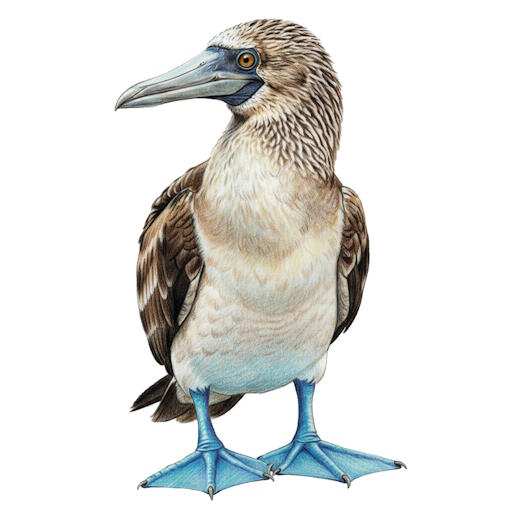
Animal Order: Suliformes
The parent class for the order of Suliformes is Aves (Avian).
The orderSuliformes presents a truly compelling study in avian evolution, representing a diverse group of highly adapted aquatic birds that includes gannets, boobies, cormorants, shags, and frigatebirds. What makes Suliformes particularly unique within the animal kingdom is their exceptional specialization for a pursuit-diving or surface-feeding piscivorous lifestyle, showcasing a remarkable convergence of traits optimized for efficient hunting in marine and freshwater environments globally.
A defining and visually striking characteristic of Suliformes is their distinctive "totipalmate" foot structure, where all four toes, including the hind toe, are joined by a web. This unique adaptation provides an expansive surface area, making them incredibly powerful and efficient swimmers and divers. Unlike many other water birds, this foot morphology allows for unparalleled propulsion and maneuverability underwater, enabling them to chase and capture fast-moving prey with remarkable agility.
Beyond their feet, many suliform species exhibit specialized gular pouches—a stretchable throat sac used for various purposes, including holding captured fish (as seen in cormorants) or for dramatic display during courtship rituals (as in frigatebirds). Their bills are typically long, strong, and often sharply hooked, perfectly suited for seizing slippery fish. Many species also possess a unique "sural" artery in their feet, which plays a role in heat exchange, allowing them to regulate their body temperature efficiently in varying aquatic conditions.
The evolutionary success of Suliformes is further evident in their varied hunting strategies. Gannets and boobies are renowned for their spectacular plunge-diving from considerable heights, streamlining their bodies to hit the water with incredible force, stunning fish before capture. Cormorants, conversely, are adept pursuit-divers, using their powerful webbed feet to propel themselves deep underwater. Frigatebirds, with their massive wingspans, are aerial kleptoparasites, often snatching fish from other seabirds, showcasing a unique ecological niche.
The close relationship between many suliform species and their aquatic habitats highlights their vital role in marine ecosystems. From the dramatic breeding colonies on remote oceanic islands to their widespread presence in coastal and inland waters, Suliformes are a testament to the power of natural selection in shaping highly specialized avian predators. Their unique combination of totipalmate feet, gular pouches, and diverse hunting techniques truly sets them apart as master fishers of the avian world, making them a fascinating subject for any zoologist or bird enthusiast.
Other Orders
There are many different orders based upon their class. To learn more about classification orders, click here.
Families within Suliformes
Within the order of Suliformes, there are one or more families of animals that share common characteristics and traits.
Each family represents a more specific grouping within the order, highlighting the diversity and specialization of species that have adapted to various ecological niches. Below is a list of families that fall under this order, showcasing the rich variety of life forms classified within this taxonomic category.
Animals in the order of Suliformes
Click on an image to learn more about one of the animals.