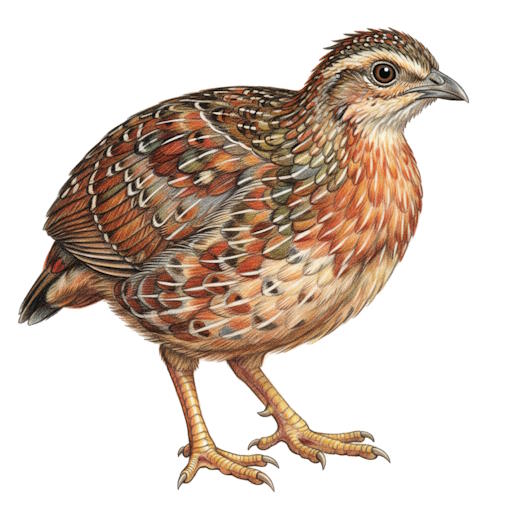
Animal Order: Tinamiformes
The parent class for the order of Tinamiformes is Aves (Avian).
The order Tinamiformes to be a truly unique and ecologically fascinating group within the avian world. Commonly known as tinamous, these ground-dwelling birds are native to Central and South America and possess a suite of characteristics that distinguish them profoundly in the animal kingdom, particularly in their evolutionary history and adaptations to their terrestrial habitats.
What truly sets tinamous apart is their ancient lineage and their remarkable resemblance to the earliest known birds. Despite their flight capabilities (though often short and explosive), their skeletal structure, particularly of the palate, is more primitive and similar to that of ratites (like ostriches and emus) than to other flying birds. This unique anatomical feature points to their evolutionary isolation and deep roots, making them living remnants of an earlier avian form.
Beyond their phylogeny, tinamous exhibit distinctive behavioral and reproductive strategies. They are well-known for their polygynandrous mating system, where females lay eggs in multiple male nests, and males are solely responsible for incubation and chick rearing. Their eggs are also extraordinarily unique—often glossy, brightly colored (ranging from iridescent green to deep blue or purple), and surprisingly robust, an adaptation thought to deter predators or parasitic birds. This unusual reproductive division of labor is a hallmark of the order.
Furthermore, tinamous are masters of camouflage. Their cryptic plumage blends seamlessly with their forest or grassland environments, allowing them to evade detection from predators. When startled, they exhibit a characteristic explosive flight, often followed by a sudden drop back into cover, disappearing as quickly as they appeared. Their relatively small wings and strong legs are perfectly adapted for a life spent foraging and navigating dense undergrowth.
Ecologically, tinamous play a crucial role as seed dispersers and insectivores in their respective ecosystems, contributing to forest regeneration and pest control. Their distinctive, often melancholic, vocalizations are a characteristic sound of their habitats, used for communication and territorial defense. The study of Tinamiformes offers invaluable insights into avian evolution, behavioral ecology, and the intricate balance of Neotropical ecosystems. Their unique blend of primitive traits and specialized adaptations makes them an endlessly intriguing subject for any zoologist.
Other Orders
There are many different orders based upon their class. To learn more about classification orders, click here.
Families within Tinamiformes
Within the order of Tinamiformes, there are one or more families of animals that share common characteristics and traits.
Each family represents a more specific grouping within the order, highlighting the diversity and specialization of species that have adapted to various ecological niches. Below is a list of families that fall under this order, showcasing the rich variety of life forms classified within this taxonomic category.
Animals in the order of Tinamiformes
Click on an image to learn more about one of the animals.