Asian Elephant
The Asian Elephant is the largest land animal in Asia, and it is a beloved symbol of many Asian cultures.
Unlike its African cousin, the Asian Elephant has smaller ears and a more rounded back. They are highly intelligent and social animals that live in family herds led by a matriarch.
The Asian Elephant is a keystone species, as its feeding habits and movements help shape the landscape and create habitats for other species. They are herbivores that feed on a wide variety of plants, and their dung helps to disperse seeds. However, the Asian Elephant is an endangered species, with its numbers declining due to habitat loss and human conflict.
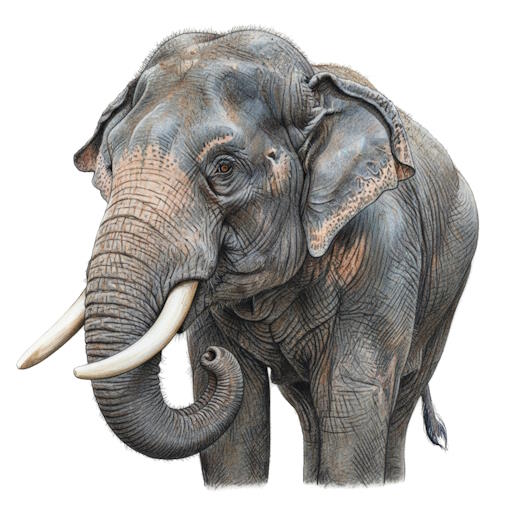
Asian Elephant
Classification
Mammalia > Proboscidea > Elephantidae > Elephas > E. maximus
Native To
Conservation Status
Average Height
8 - 10 feet
(2.4 - 3 m)
Average Weight
6,000 - 11,000 lbs
(2,700 - 5,000 kg)
Average Life Span
60 - 70 years
Gestation Period
640 - 660 days
Did You Know?
The Asian Elephant is the largest land animal in Asia.
They have smaller ears compared to African elephants, which are shaped like the Indian subcontinent.
Asian Elephants are highly intelligent and have complex social structures, living in herds led by a matriarch.
Their trunks are incredibly versatile, used for breathing, smelling, touching, grasping, and producing sounds.
Unlike African elephants, only some male Asian Elephants have tusks.
They communicate using a variety of vocalizations, including rumbling sounds that are too low for humans to hear.
Asian Elephants play a crucial role in their ecosystems as "gardeners of the forest," dispersing seeds and creating pathways.
They can live for up to 60 years in the wild.
Sadly, Asian Elephants are endangered, primarily due to habitat loss and poaching.
Photo Gallery
No images provided yet. Be the first to upload one!