Black Bear
The Black Bear is the most common and widespread bear species in North America. Unlike its larger cousin the Grizzly Bear, the Black Bear is generally less aggressive and more adaptable. Its diet is incredibly varied, consisting of berries, nuts, insects, fish, and small mammals. This omnivorous diet allows it to thrive in a wide variety of habitats, from forests to mountains.
Black Bears are known for their intelligence and their powerful sense of smell, which they use to find food. They are also excellent climbers, and their claws allow them to scale trees with ease. While they are generally shy and avoid human contact, they can become a nuisance if they learn to associate humans with food.
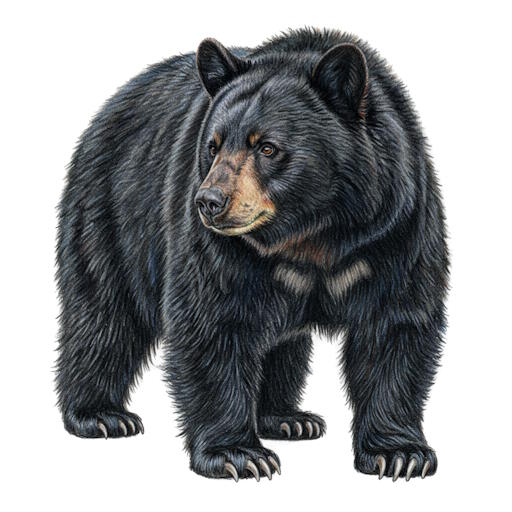
Black Bear
Native To
Conservation Status
Average Height
2 - 3.5 feet
(0.6 - 1.1 m)
Average Weight
200 - 600 lbs
(90 - 270 kg)
Average Life Span
15 - 20 years
Gestation Period
220 days
Diet
Omnivore (berries, nuts, insects, fish, small mammals)
Social Structure
Solitary
Biomes
(And Habitats)
Did You Know?
The Black Bear is the most common bear species in North America.
Despite their name, Black Bears can be various colors, including brown, cinnamon, and even blond.
They are excellent climbers and can scale trees quickly to escape danger or find food.
Black Bears are omnivores, with a diet that includes berries, nuts, insects, and small animals.
They typically hibernate during the colder months, though the duration and necessity of hibernation can vary based on climate and food availability.
A Black Bear's sense of smell is incredibly keen, allowing them to detect food from miles away.
Female Black Bears are devoted mothers, raising their cubs for about 1.5 to 2 years before they become independent.
Photo Gallery
No images provided yet. Be the first to upload one!