Capercaillie
The Capercaillie is a large species of grouse native to the coniferous forests of Europe and Asia. It is the largest living species of grouse, and the male is known for its impressive size and its stunning, iridescent plumage.
The male Capercaillie performs a unique and elaborate mating display, which involves a series of loud, clicking sounds and a fan-shaped tail display.
The Capercaillie is a vital part of its ecosystem, as its presence is an indicator of a healthy and diverse forest environment. However, its numbers have been declining due to habitat loss and fragmentation.
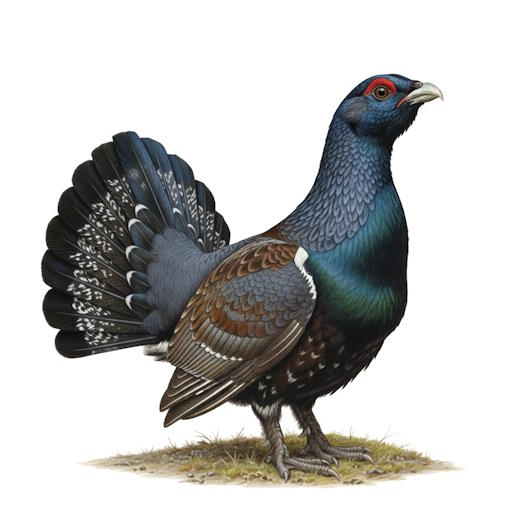
Capercaillie
Classification
Aves > Galliformes > Phasianidae > Tetrao > T. urogallus
Native To
Conservation Status
Average Height
2.5 - 3 feet
(0.8 - 0.9 m)
Average Weight
8 - 14 lbs
(3.6 - 6.3 kg)
Average Life Span
10 - 15 years
Gestation Period
26 - 28 days
Did You Know?
The Capercaillie is the largest species of grouse in the world, with males weighing up to 9 pounds!
They are known for their spectacular courtship display, where males fan their tails, droop their wings, and perform a bubbling call to attract females.
Capercaillies primarily feed on pine needles, buds, and berries, especially during the winter months.
These birds are found in mature conifer forests across northern Eurasia.
Despite their large size, Capercaillies can be surprisingly elusive, spending much of their time on the ground.
Their droppings, called "ceca," are distinctive and often used by researchers to monitor their populations.
The name "Capercaillie" comes from the Scottish Gaelic "capull coille," meaning "horse of the woods."
Photo Gallery
No images provided yet. Be the first to upload one!