Common Wombat
The Common Wombat is a large, burrowing marsupial native to the forests and mountains of southeastern Australia. It is known for its unique, backward-facing pouch, which helps to keep dirt out when it is digging.
The Common Wombat is a master of excavation, capable of digging extensive burrows with its powerful claws. It is a herbivore that feeds on a variety of grasses and plants. The Common Wombat is a vital part of its ecosystem, as its burrows provide shelter for a variety of other animals.
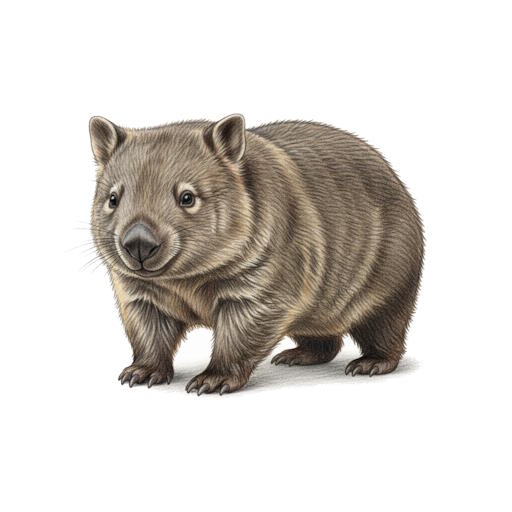
Common Wombat
Classification
Mammalia > Diprotodontia > Vombatidae > Vombatus > V. ursinus
Native To
Conservation Status
Average Height
2.5 - 3 feet
(0.8 - 0.9 m)
Average Weight
50 - 75 lbs
(23 - 34 kg)
Average Life Span
15 - 20 years
Gestation Period
20 - 22 days
Did You Know?
The Common Wombat is a marsupial native to southeastern Australia and Tasmania.
They are nocturnal and spend most of their days sleeping in burrows.
Common Wombats have a unique backward-facing pouch, which helps them avoid getting dirt on their young while digging.
Their teeth grow continuously, allowing them to graze on tough grasses and roots.
Despite their cuddly appearance, Common Wombats can run up to 25 miles per hour (40 km/h) for short distances.
They have a very tough rump, made of thick bone and cartilage, which they use to block burrow entrances from predators.
Common Wombats are herbivores, primarily eating grasses, roots, and fungi.
Photo Gallery
No images provided yet. Be the first to upload one!