Dodo
The Dodo was a large, flightless bird native to the island of Mauritius in the Indian Ocean. It was a close relative of the pigeon and it was known for its plump body, its short, stumpy legs, and its large, hooked beak.
The Dodo was a herbivore that fed on a variety of fruits and seeds. It is believed to have been hunted to extinction by humans and their introduced animals in the 17th century. Its extinction is a tragic reminder of the impact of human activity on our planet's biodiversity.
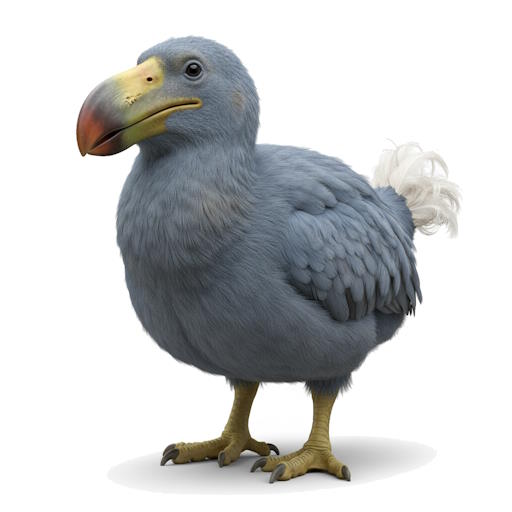
Dodo
Classification
Aves > Columbiformes > Columbidae > Raphus > R. cucullatus
Native To
Conservation Status
Average Height
3 feet
(0.9 m)
Average Weight
20 - 25 lbs
(9 - 11.3 kg)
Average Life Span
15 - 20 years
Gestation Period
30 days
Did You Know?
The Dodo was a flightless bird endemic to the island of Mauritius, in the Indian Ocean.
Sadly, the Dodo became extinct in the mid-17th century, largely due to human activity and introduced species.
Because there were no natural predators on Mauritius, the Dodo had no fear of humans, making them easy targets for sailors.
The Dodo's name likely comes from the Portuguese word "doudo" meaning "fool" or "simpleton," referring to its apparent lack of fear.
They were relatively large birds, weighing around 23 kilograms (50 pounds) and standing about 1 meter (3.3 feet) tall.
The Dodo primarily ate fruits, seeds, and possibly small invertebrates.
Photo Gallery
No images provided yet. Be the first to upload one!