Emperor Penguin
The Emperor Penguin is the tallest and heaviest penguin species in the world, native to the icy waters and ice sheets of Antarctica. It is known for its striking black and white plumage and its beautiful golden-orange neck patch.
The Emperor Penguin is a true survivor, able to withstand temperatures as low as -40°F. The most fascinating aspect of its life is its unique breeding cycle, which takes place during the harsh Antarctic winter. The male incubates the egg on his feet for two months, without eating, while the female is at sea.
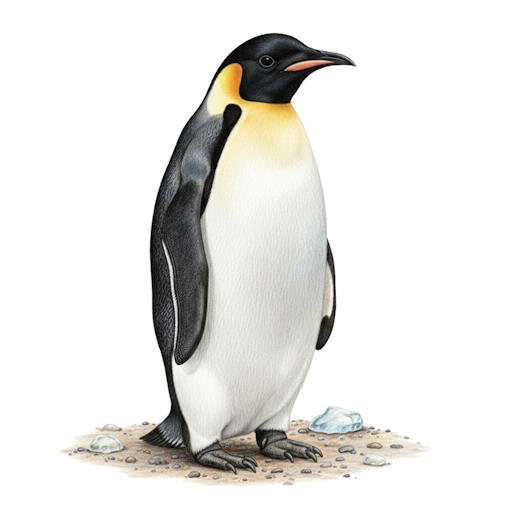
Emperor Penguin
Classification
Aves > Sphenisciformes > Spheniscidae > Aptenodytes > A. forsteri
Native To
Conservation Status
Average Height
3.5 - 4 feet
(1.1 - 1.2 m)
Average Weight
50 - 90 lbs
(23 - 41 kg)
Average Life Span
15 - 20 years
Gestation Period
60 - 65 days
Did You Know?
The Emperor Penguin is the tallest and heaviest of all living penguin species.
They are found exclusively in Antarctica, enduring the harshest conditions on Earth.
Unlike most birds, male Emperor Penguins incubate the single egg on their feet for over 60 days in the middle of winter, without eating.
Emperor Penguins can dive deeper than any other bird, reaching depths of over 1,800 feet!
They can stay underwater for nearly 20 minutes.
Their thick layer of blubber and dense feathers provide excellent insulation against the cold.
Emperor Penguins huddle together in large groups to stay warm during fierce Antarctic storms.
They feed primarily on fish, squid, and krill.
Chicks are covered in soft, downy feathers for warmth and shed them when they are ready to swim.
Photo Gallery
No images provided yet. Be the first to upload one!