Hyacinth Macaw
The Hyacinth Macaw is a species of parrot native to central and eastern South America. It is the largest flying parrot species in the world, with a length of up to 3.3 feet from the tip of its tail to the top of its head.
With its striking cobalt-blue plumage and a bright yellow ring around its eye and at the base of its beak, the Hyacinth Macaw is one of the most visually stunning birds on Earth. It possesses an incredibly strong beak, which it uses to crack open the hard shells of nuts, such as Brazil nuts and palm nuts, which make up a significant portion of its diet. Unfortunately, due to habitat loss and illegal trapping for the pet trade, the Hyacinth Macaw is a vulnerable species. Conservation efforts have been put in place to protect these magnificent birds and their rainforest homes.
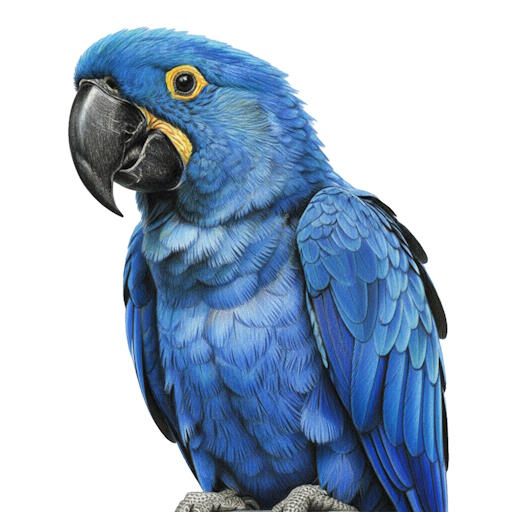
Hyacinth Macaw
Classification
Aves > Psittaciformes > Psittacidae > Anodorhynchus > A. hyacinthinus
Native To
Conservation Status
Average Height
3 feet
(0.9 m)
Average Weight
3 - 4 lbs
(1.4 - 1.8 kg)
Average Life Span
50 - 60 years
Gestation Period
28 days
Did You Know?
The Hyacinth Macaw is the largest parrot species in the world, measuring up to 3.3 feet (1 meter) from head to tail.
They have an incredibly powerful beak, strong enough to crack open hard nuts like coconuts.
Hyacinth Macaws are native to central and eastern South America.
They are highly social birds and often live in flocks of up to 30 individuals.
Despite their size, they are gentle and friendly birds.
Their diet mainly consists of nuts, seeds, fruits, and berries.
Photo Gallery
No images provided yet. Be the first to upload one!