Iberian Wolf
The Iberian Wolf (Canis lupus signatus) is a subspecies of gray wolf native to the Iberian Peninsula. It is smaller and more slender than its North American counterparts, with a coat that is typically a mix of brown, black, and gray.
These wolves are social animals that live in packs, with a complex hierarchy and strong family bonds. They primarily hunt large mammals such as wild boar and deer, but will also prey on smaller animals and livestock. For centuries, they were persecuted by humans due to conflicts with farming. Today, they are a protected species in some areas, but they still face threats from habitat fragmentation, illegal hunting, and road collisions. Their presence is a vital sign of a healthy ecosystem, and efforts are underway to ensure their long-term survival in the wild.
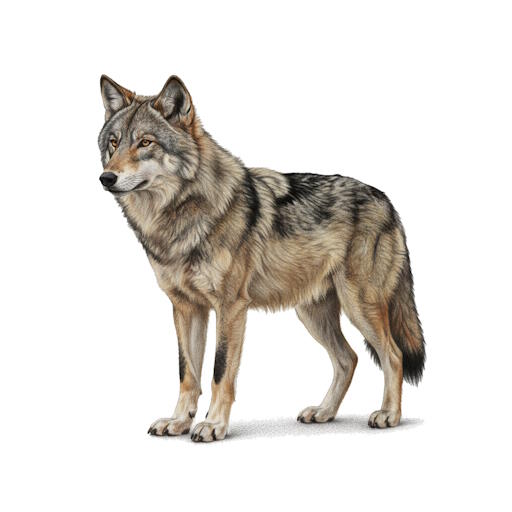
Iberian Wolf
Native To
Conservation Status
Average Height
2.5 - 3 feet
(0.8 - 0.9 m)
Average Weight
60 - 80 lbs
(27 - 36 kg)
Average Life Span
6 - 8 years
Gestation Period
62 - 63 days
Did You Know?
The Iberian Wolf is a subspecies of grey wolf native to the Iberian Peninsula, which includes Spain and Portugal.
These wolves are smaller and more slender than other European wolf subspecies, with a reddish-brown coat.
Iberian Wolves are highly social animals and live in packs, typically consisting of a breeding pair and their offspring.
Their diet mainly consists of wild boar, deer, and rabbits.
The Iberian Wolf plays a crucial role in maintaining healthy ecosystems by controlling prey populations.
They are known for their distinctive howl, which is used for communication within the pack and to mark territory.
Conservation efforts are ongoing to protect the Iberian Wolf and its habitat, as it is a vulnerable species.
Photo Gallery
No images provided yet. Be the first to upload one!