Lyrebird
The Lyrebird (Menura) is a genus of two species of ground-dwelling birds native to Australia. It is famous for its incredible ability to mimic a wide range of sounds from its environment, including the calls of other birds, the sounds of chainsaws, car alarms, and camera shutters.
The male Lyrebird will perform an elaborate display during the breeding season, singing a complex song with a variety of mimicked sounds to attract a mate.
The Lyrebird has a beautiful, lyre-shaped tail, which it fans out during its display. The Lyrebird's mimicry is one of the most remarkable examples of vocal learning in the animal kingdom.
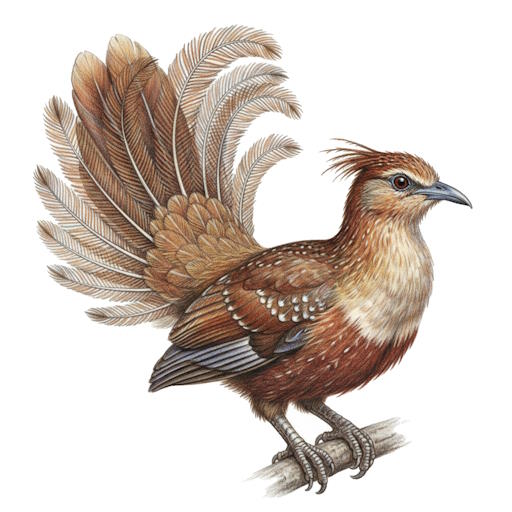
Lyrebird
Classification
Aves > Passeriformes > Menuridae > Menura > M. novaehollandiae
Native To
Conservation Status
Average Height
2 - 3 feet
(0.6 - 0.9 m)
Average Weight
2 - 3 lbs
(0.9 - 1.4 kg)
Average Life Span
10 - 15 years
Gestation Period
18 - 20 days
Did You Know?
The Lyrebird is a remarkable mimic, able to imitate almost any sound it hears, from other birds and animals to car alarms, chainsaws, and even human speech!
During courtship, male Lyrebirds perform an elaborate dance and song routine on a mound of earth, fanning out their magnificent tail feathers.
Their tail feathers, especially in males, are incredibly long and ornate, resembling a lyre when fanned out.
Lyrebirds are native to Australia and are primarily ground-dwelling birds, foraging for insects and other invertebrates.
They have powerful legs and feet, which they use to scratch through leaf litter in search of food.
Photo Gallery
No images provided yet. Be the first to upload one!