Magellanic Penguin
The Magellanic Penguin (Spheniscus magellanicus) is a species of penguin native to the coast of South America. It is a medium-sized penguin with a black and white body and a black stripe that runs around its face.
Magellanic Penguins are a migratory species, traveling thousands of miles each year to their breeding grounds in Argentina, Chile, and the Falkland Islands. They are a social species, forming large nesting colonies.
Magellanic Penguins are a crucial part of the marine ecosystem, feeding on a variety of fish and squid. They are a near-threatened species, facing threats from oil spills and climate change.
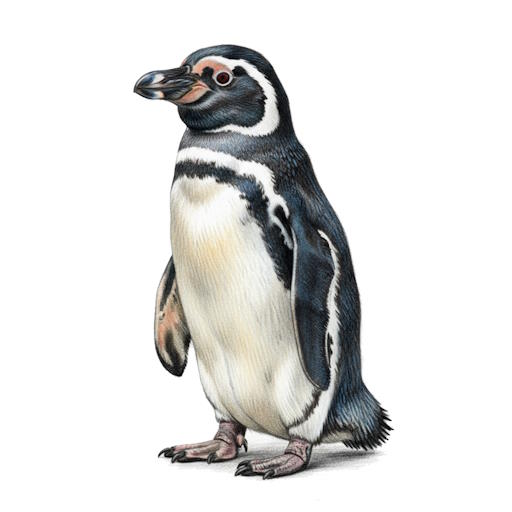
Magellanic Penguin
Classification
Aves > Sphenisciformes > Spheniscidae > Spheniscus > S. magellanicus
Native To
Conservation Status
Average Height
2 feet
(0.6 m)
Average Weight
6 - 10 lbs
(2.7 - 4.5 kg)
Average Life Span
20 - 25 years
Gestation Period
40 - 45 days
Did You Know?
The Magellanic Penguin is named after Ferdinand Magellan, who first spotted them in 1520.
They are found in South America, primarily along the coasts of Argentina, Chile, and the Falkland Islands.
Magellanic Penguins are migratory birds, traveling thousands of miles each year for feeding and breeding.
They can swim at speeds of up to 15 miles per hour.
These penguins dig burrows in the ground to lay their eggs and raise their chicks.
Magellanic Penguins communicate with a variety of vocalizations, including a loud, braying call that sounds like a donkey.
Their diet mainly consists of small fish, squid, and crustaceans.
They have a distinctive black band across their chest, which helps distinguish them from other penguin species.
Magellanic Penguins can hold their breath for several minutes while diving for food.
Photo Gallery
No images provided yet. Be the first to upload one!