Orangutan
The Orangutan (Pongo) is a genus of great ape native to the rainforests of Sumatra and Borneo. It is a gentle and intelligent primate.
Orangutans are highly arboreal, spending most of their lives high in the trees. They are the only great ape that is found in Asia.
The Orangutan is a solitary animal.
The Orangutan is a critically endangered species, facing threats from habitat loss due to deforestation. Conservation efforts are crucial to the survival of this beautiful and intelligent ape.
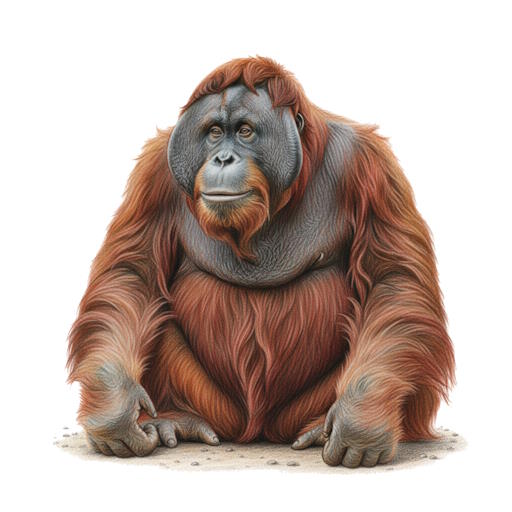
Orangutan
Native To
Conservation Status
Average Height
3 - 4.5 feet
(0.9 - 1.4 m)
Average Weight
66 - 220 lbs
(30 - 100 kg)
Average Life Span
30 - 40 years
Gestation Period
230 - 270 days
Did You Know?
The Orangutan is the largest arboreal (tree-dwelling) mammal in the world.
Their name means "person of the forest" in Malay.
Orangutans share about 97% of their DNA with humans.
They have long, powerful arms that can span over 7 feet, which are perfect for swinging through trees.
Orangutans are primarily frugivores, meaning their diet mainly consists of fruit.
They build elaborate nests in trees to sleep in each night.
Female Orangutans have one of the longest interbirth intervals of any mammal, typically giving birth every 6 to 8 years.
Sadly, Orangutan populations are critically endangered due to habitat loss from deforestation.
Photo Gallery
No images provided yet. Be the first to upload one!