Passenger Pigeon
The Passenger Pigeon (Ectopistes migratorius) was a species of pigeon native to North America. It was once the most numerous bird in the world, with flocks so large they would darken the sky.
The Passenger Pigeon was a social species, living in massive colonies.
It was driven to extinction in the early 20th century due to a combination of overhunting and habitat loss. The last confirmed individual died in 1914. The extinction of the Passenger Pigeon is a powerful and haunting example of the impact of human activity on wildlife.
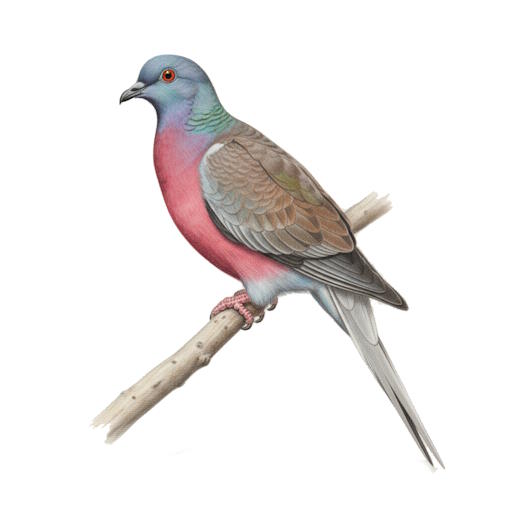
Passenger Pigeon
Classification
Aves > Columbiformes > Columbidae > Ectopistes > E. migratorius
Native To
Conservation Status
Average Height
12 - 15 inches
(30 - 38 cm)
Average Weight
9 - 12 oz
(255 - 340 g)
Average Life Span
15 - 20 years
Gestation Period
14 days
Did You Know?
The Passenger Pigeon was once the most abundant bird in North America, with flocks so large they would darken the sky for hours.
Sadly, due to extensive hunting and habitat loss, the Passenger Pigeon went extinct in the early 20th century. The last known individual, Martha, died in 1914 at the Cincinnati Zoo.
These pigeons were highly social birds, nesting in massive colonies that could cover hundreds of square miles.
Their diet primarily consisted of nuts, especially acorns and beechnuts.
The disappearance of the Passenger Pigeon is a cautionary tale about the impact of human activities on wildlife.
Photo Gallery
No images provided yet. Be the first to upload one!