Quokka
The Quokka Setonix brachyurus is a small macropod, a type of marsupial, native to a few small islands off the coast of Western Australia. It is most famously found on Rottnest Island, where it is a protected species.
Quokkas are known for their cheerful and photogenic appearance, which has earned them the nickname "the world's happiest animal". They are about the size of a domestic cat and have a thick, brown-gray fur, a short tail, and small, rounded ears.
Quokkas are herbivores, feeding on grasses, leaves, stems, and bark. They are primarily nocturnal, spending their days resting in the shade and their nights foraging for food.
Quokkas are incredibly trusting and have little fear of humans, often approaching people for food or photos. However, it is important to remember that they are wild animals, and feeding them can be harmful. Due to their limited habitat and vulnerability to predators on the mainland, their population is closely monitored and protected.
The Quokka's friendly nature and unique appearance make it a true Australian icon and a highlight for any visitor to Rottnest Island.
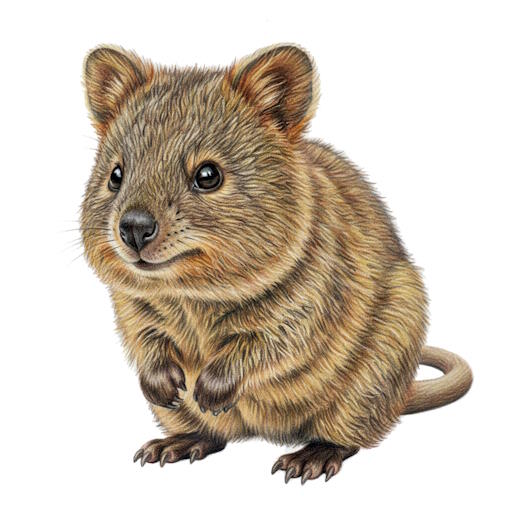
Quokka
Classification
Mammalia > Diprotodontia > Macropodidae > Setonix > S. brachyurus
Native To
Conservation Status
Average Height
1.5 feet
(0.5 m)
Average Weight
4 - 6 lbs
(1.8 - 2.7 kg)
Average Life Span
10 years
Gestation Period
27 days
Diet
Herbivore (grasses, leaves)
Social Structure
Solitary
Biomes
(And Habitats)
Desert and Arid and Temperate Forest
(Forests and Scrublands)
Did You Know?
The Quokka is a small macropod, meaning "large foot," similar to a kangaroo or wallaby.
They are native to a few small islands off the coast of Western Australia, primarily Rottnest Island.
Quokkas are known for their naturally smiling appearance, making them popular subjects for "selfies."
They are herbivores and primarily eat grasses, leaves, seeds, and fruit.
Quokkas are nocturnal, meaning they are most active at night.
They can climb small trees and shrubs to find food.
Quokkas can go for long periods without water, getting most of their hydration from the food they eat.
They are a vulnerable species, facing threats from habitat loss and predators.
Photo Gallery
No images provided yet. Be the first to upload one!