Red-legged Seriema
The Red-legged Seriema Cariama cristata is a large, long-legged bird native to the grasslands and woodlands of central and eastern South America. It is a member of the order Cariamiformes, and its closest living relatives are the extinct "terror birds" Phorusrhacidae.
The Red-legged Seriema is known for its long, bright red legs and its powerful kick, which it uses to subdue prey. It is a terrestrial bird and prefers to run rather than fly, and it can reach impressive speeds when chasing prey or escaping from a predator. Its diet consists of insects, small reptiles, rodents, and snakes. It is also known for its loud, piercing vocalizations, which are often described as a series of repeated calls that can be heard for miles. These calls are used to communicate with other seriemas and to announce their territory.
The Red-legged Seriema is a fascinating example of a large, flightless bird that has adapted to a life on the ground. Its unique appearance and powerful presence make it a true icon of the South American grasslands.
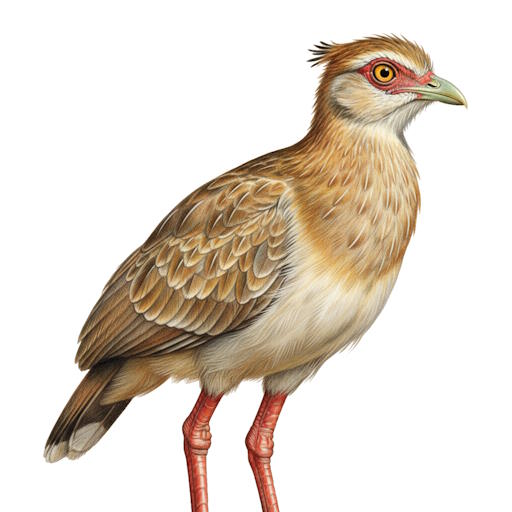
Red-legged Seriema
Classification
Aves > Cariamiformes > Cariamidae > Cariama > C. cristata
Native To
Conservation Status
Average Height
2 - 2.5 feet
(0.6 - 0.8 m)
Average Weight
2 - 3 lbs
(0.9 - 1.4 kg)
Average Life Span
10 - 15 years
Gestation Period
24 - 30 days
Diet
Carnivore (insects, snakes, lizards, small mammals)
Social Structure
Pair bond
Biomes
(And Habitats)
Did You Know?
The Red-legged Seriema is a large, long-legged bird native to South America, primarily found in grasslands and savannas.
Unlike many birds, they prefer to run rather than fly and can reach speeds of up to 15 miles per hour (25 km/h).
They are known for their loud, distinctive call, which sounds like a laughing or cackling sound and can be heard from a long distance.
The Red-legged Seriema is a carnivorous bird, feeding on insects, small reptiles, rodents, and even other birds.
They have a unique claw on their second toe that they use to help tear apart their prey.
They build their nests in trees or shrubs, usually not very high off the ground.
These birds are often seen hunting cooperatively, working together to flush out prey.
Photo Gallery
No images provided yet. Be the first to upload one!