Roadrunner
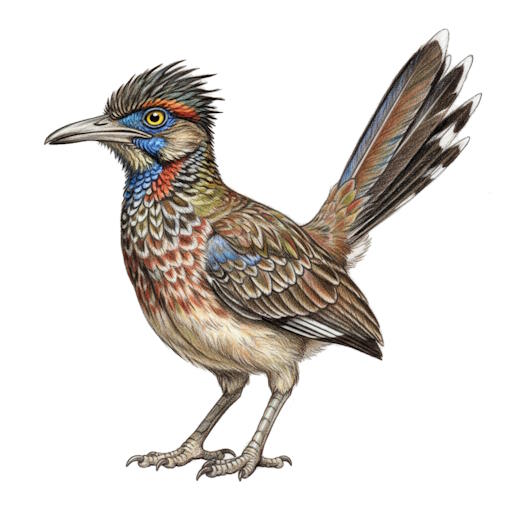
The Roadrunner Geococcyx is a genus of ground-dwelling cuckoos native to the southwestern United States and Mexico. There are two species, the Greater Roadrunner and the Lesser Roadrunner.
Roadrunners are famous for their incredible running speed, which can reach up to 20 miles per hour. They are known for their long legs and long tail, which they use for balance while running.
Roadrunners are carnivorous and will eat almost anything they can catch, including insects, lizards, snakes, and even small birds. They are especially known for their ability to hunt and kill venomous snakes, such as rattlesnakes.
Roadrunners rarely fly, preferring to run or glide short distances. They are well-adapted to the hot, arid environments in which they live.
The Greater Roadrunner is a beloved character in American folklore and popular culture, most famously in the "Wile E. Coyote and the Road Runner" cartoons. Its speed, cunning, and unique appearance make it a true icon of the American desert.
Roadrunner
Classification
Aves > Cuculiformes > Cuculidae > Geococcyx > G. californianus
Native To
Conservation Status
Average Height
2 feet
(0.6 m)
Average Weight
8 - 10 oz
(227 - 283 g)
Average Life Span
7 - 8 years
Gestation Period
19 - 20 days
Did You Know?
The Roadrunner is a fast, ground-dwelling bird found in the southwestern United States and Mexico.
They can run at speeds up to 20 miles per hour (32 km/h), making them one of the fastest running birds.
Roadrunners primarily eat insects, lizards, snakes (including rattlesnakes!), small birds, and rodents.
They build nests in cacti or shrubs, typically laying 2-6 eggs.
A Roadrunner's diet often includes venomous prey, as they are largely immune to many types of venom.
They have a distinctive crest and long tail, and often raise and lower their crest while running.
Roadrunners are members of the cuckoo family.
Their unique "X" shaped footprint can confuse predators because it's hard to tell which way the bird is heading.
Roadrunners can conserve water by reabsorbing it from their feces before excretion.
Photo Gallery
No images provided yet. Be the first to upload one!