Snowy Owl
The Snowy Owl Bubo scandiacus, also known as the Snow Owl, is a large owl native to the Arctic tundra of North America and Eurasia. It is one of the most recognizable owls, with its striking white plumage, which provides excellent camouflage in the snowy environment.
Male Snowy Owls are almost completely white, while females and juveniles have more dark markings. The Snowy Owl is a powerful and intelligent hunter, preying on a variety of animals, including lemmings, voles, and other birds.
Unlike most owls, the Snowy Owl is primarily diurnal, meaning it is active during the day. It has a keen sense of hearing and a powerful set of talons, which it uses to capture its prey. The Snowy Owl is a true symbol of the Arctic, a powerful and resilient bird that has adapted to life in one of the world's harshest environments. Its presence is a reminder of the incredible life that exists in the far north.
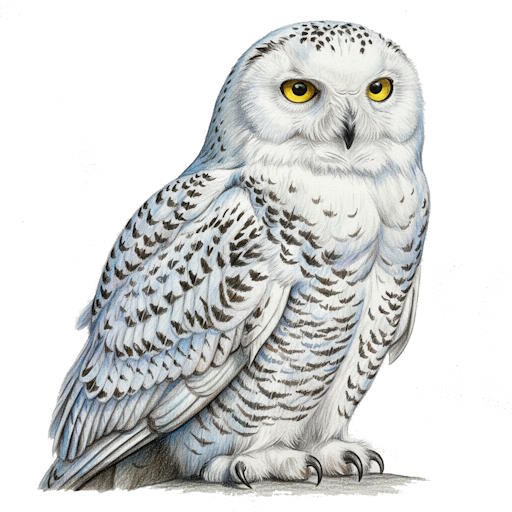
Snowy Owl
Classification
Aves > Strigiformes > Strigidae > Bubo > B. scandiacus
Native To
Conservation Status
Average Height
1.5 - 2 feet
(0.4 - 0.6 m)
Average Weight
3 - 5 lbs
(1.4 - 2.3 kg)
Average Life Span
10 years
Gestation Period
32 - 37 days
Did You Know?
The Snowy Owl is one of the largest owl species in North America and the Arctic.
They are highly adapted to cold, Arctic environments, with thick feathering on their legs and feet to insulate them.
Unlike most owls, Snowy Owls are often active during the day, especially in the continuous daylight of the Arctic summer.
Their diet primarily consists of lemmings, but they also eat other small mammals and birds.
The male Snowy Owl is almost pure white, while females and younger owls have more dark markings.
They build their nests on the ground, typically on a raised mound or hummock, to get a good view of their surroundings.
Snowy Owls have excellent hearing and eyesight, which they use to locate prey even under a layer of snow.
Photo Gallery
No images provided yet. Be the first to upload one!