Southern Hairy-nosed Wombat
The Southern Hairy-nosed Wombat Lasiorhinus latifrons is a species of wombat native to the semi-arid grasslands of southern Australia. It is a burrowing marsupial known for its powerful claws, which it uses to dig extensive burrow systems.
The Southern Hairy-nosed Wombat is distinguished from other wombats by its silky fur and its unique hairy nose. They are primarily nocturnal and crepuscular, spending their nights foraging for grasses and roots.
Wombats are solitary and territorial animals, and they use their burrows to escape from the heat and to protect themselves from predators.
While the Southern Hairy-nosed Wombat is not currently endangered, it does face threats from habitat loss and competition with introduced species.
The Southern Hairy-nosed Wombat is a true symbol of the resilience and uniqueness of the Australian fauna, a powerful digger and a vital part of the underground ecosystem.
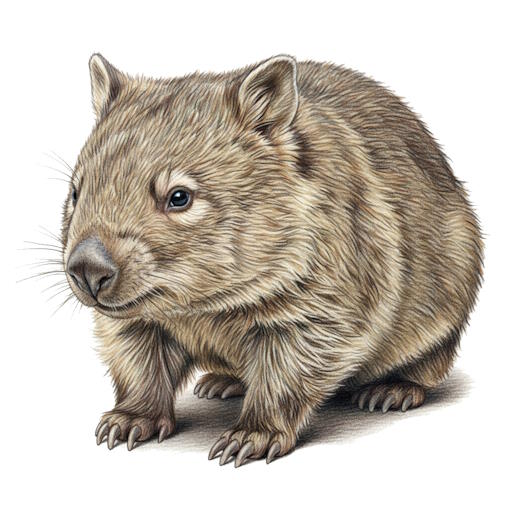
Southern Hairy-nosed Wombat
Classification
Mammalia > Diprotodontia > Vombatidae > Lasiorhinus > L. latifrons
Native To
Conservation Status
Average Height
2.5 - 3 feet
(0.8 - 0.9 m)
Average Weight
40 - 70 lbs
(18 - 32 kg)
Average Life Span
15 - 20 years
Gestation Period
20 - 22 days
Did You Know?
The Southern Hairy-nosed Wombat is native to South Australia.
They are excellent burrowers, digging extensive tunnel systems with their strong claws.
The Southern Hairy-nosed Wombat has poor eyesight but a strong sense of smell, which helps them find food at night.
Their diet consists mainly of grasses, roots, and fungi.
These wombats have a backward-facing pouch, which helps protect their young from dirt while digging.
They are primarily nocturnal, coming out at night to feed.
The Southern Hairy-nosed Wombat is a marsupial, meaning it carries its young in a pouch.
Photo Gallery
No images provided yet. Be the first to upload one!