Sugar Glider
The Sugar Glider Petaurus breviceps is a small, gliding marsupial native to the forests of eastern and northern mainland Australia, New Guinea, and the Bismarck Archipelago. It is known for its gliding membrane, or "patagium," which stretches from its wrists to its ankles.
The Sugar Glider can glide for distances of up to 150 feet, steering with its tail.
As its name suggests, the Sugar Glider has a sweet tooth. Its diet consists of sugary foods like nectar, sap, and honeydew, as well as insects and arachnids.
The Sugar Glider has large, forward-facing eyes, which help it to see in the dark. They are highly social animals that live in colonies.
The Sugar Glider's unique gliding ability and its sweet-toothed diet make it a fascinating and important animal of the forest canopy.
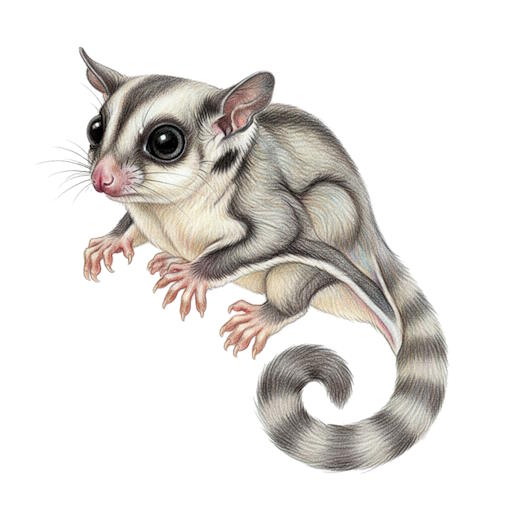
Sugar Glider
Classification
Mammalia > Diprotodontia > Petauridae > Petaurus > P. breviceps
Native To
Conservation Status
Average Height
5 - 6 inches
(13 - 15 cm)
Average Weight
4 - 6 oz
(113 - 170 g)
Average Life Span
10 - 15 years
Gestation Period
15 - 17 days
Did You Know?
The Sugar Glider is a small, nocturnal, arboreal possum native to Australia, Indonesia, and Papua New Guinea.
They are named for their love of sweet foods (like nectar and sap) and their ability to glide through the air using a membrane called a patagium, which stretches from their wrists to their ankles.
Sugar Gliders are highly social animals and often live in groups, communicating through a variety of vocalizations, including barking and chirping.
Photo Gallery
No images provided yet. Be the first to upload one!