Sun Bear
The Sun Bear Helarctos malayanus is the smallest bear species in the world, native to the tropical forests of Southeast Asia. It is known for its shiny, black fur and a unique, crescent-shaped, yellow or orange patch on its chest, which is said to resemble a rising sun.
The Sun Bear has a long, slender tongue, which it uses to extract honey from beehives and insects from logs. It is a highly arboreal animal, spending a lot of its time in trees, where it builds nests for resting and sleeping.
The Sun Bear is a vulnerable species, facing threats from habitat loss due to deforestation and the illegal wildlife trade. It is a crucial part of its ecosystem, as it helps to disperse seeds and control insect populations.
The Sun Bear's unique appearance and lifestyle make it a fascinating and important animal of the rainforest.
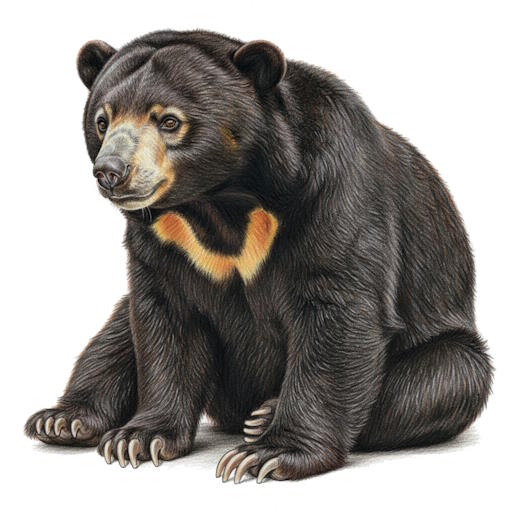
Sun Bear
Native To
Conservation Status
Average Height
2 - 2.5 feet
(0.6 - 0.8 m)
Average Weight
60 - 100 lbs
(27 - 45 kg)
Average Life Span
20 - 25 years
Gestation Period
95 - 96 days
Did You Know?
The Sun Bear is the smallest bear species in the world, typically weighing between 60 and 150 pounds.
They have an unusually long tongue, which can extend up to 10 inches, perfect for extracting honey from beehives and insects from crevices.
Sun Bears have a distinctive U-shaped patch of golden or white fur on their chest, which is unique to each individual.
They are excellent climbers and spend a lot of time in trees, where they forage for fruit and build nests for sleeping.
The Sun Bear is primarily nocturnal, meaning they are most active at night.
Photo Gallery
No images provided yet. Be the first to upload one!