Takahe
The Takahe Porphyrio hochstetteri is a large, flightless bird native to New Zealand. It is a member of the rail family and is known for its striking blue-green plumage, a large, powerful red bill, and red legs.
The Takahe was once thought to be extinct, with the last confirmed sighting in 1898. However, in a remarkable discovery in 1948, a small population was found in a remote valley in the South Island. This discovery led to a dedicated conservation effort to save the species from extinction.
The Takahe is a secretive and territorial bird, living in alpine grasslands and feeding on tussock grasses and ferns. It is an important part of its ecosystem, helping to disperse seeds and maintain a balance in the plant life. The Takahe's survival is a powerful symbol of successful conservation and the importance of protecting endangered species.
The Takahe's story is a reminder that even when a species is thought to be lost, there is still hope for its future.
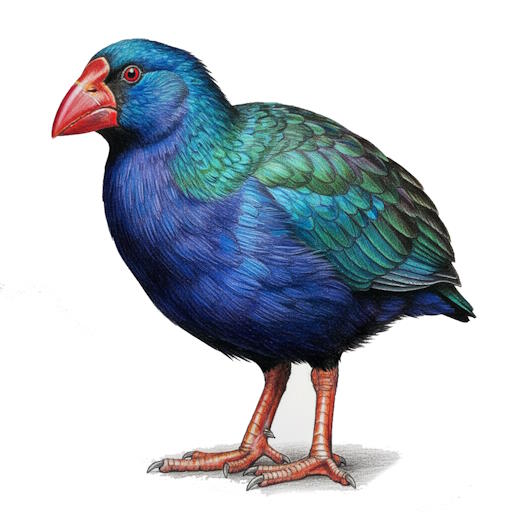
Takahe
Classification
Aves > Gruiformes > Rallidae > Porphyrio > P. hochstetteri
Native To
Conservation Status
Average Height
2 feet
(0.6 m)
Average Weight
5 - 6 lbs
(2.3 - 2.7 kg)
Average Life Span
20 years
Gestation Period
30 days
Did You Know?
The Takahe is a flightless bird native to New Zealand, once thought to be extinct!
They are the largest living member of the rail family and have striking blue and green plumage with a large red bill.
Takahe are herbivores, primarily eating tussock grass, but also seeds, insects, and berries.
These shy birds live in alpine grasslands and rely on their powerful legs to move around.
The Takahe population is slowly recovering thanks to intensive conservation efforts, including predator control and relocation to predator-free islands.
Photo Gallery
No images provided yet. Be the first to upload one!