Tasmanian Devil
The Tasmanian Devil Sarcophilus harrisii is a carnivorous marsupial native to the island of Tasmania, Australia. It is the largest living carnivorous marsupial and is known for its powerful bite, which is one of the strongest of any mammal relative to its size.
The Tasmanian Devil has a stocky build, a black coat, and a fierce reputation. It is a solitary and nocturnal animal, feeding on carrion and small prey. The Tasmanian Devil is a crucial part of its ecosystem as a scavenger, helping to keep the environment clean.
Unfortunately, the Tasmanian Devil is facing a devastating threat from a contagious cancer known as Devil Facial Tumor Disease (DFTD). This disease has decimated the wild population, and conservation efforts are underway to create an insurance population of healthy devils.
The Tasmanian Devil is a true symbol of the wild and unique fauna of Australia and a powerful reminder of the fragility of species in the face of disease.
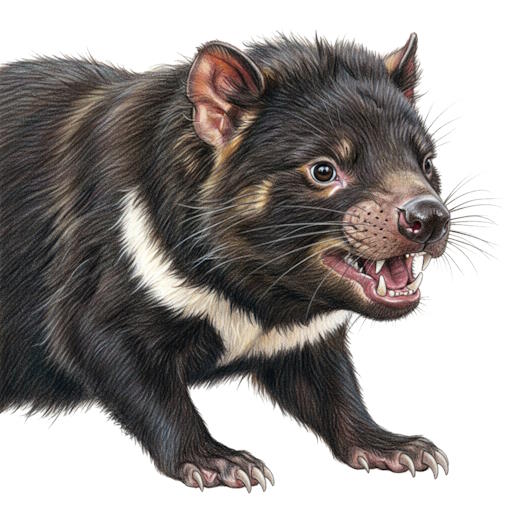
Tasmanian Devil
Classification
Mammalia > Dasyuromorphia > Dasyuridae > Sarcophilus > S. harrisii
Native To
Conservation Status
Average Height
1 - 1.5 feet
(0.3 - 0.5 m)
Average Weight
10 - 26 lbs
(4.5 - 12 kg)
Average Life Span
5 years
Gestation Period
21 days
Did You Know?
The Tasmanian Devil is the largest carnivorous marsupial in the world.
They are known for their loud screeches, strong bite, and ferocious eating habits.
Despite their aggressive reputation, they are generally shy animals.
Tasmanian Devils store fat in their tails. A thick tail indicates a healthy devil.
They are nocturnal, meaning they are most active at night.
Young Tasmanian Devils are called "pups" or "joeys."
They have incredibly strong jaws and teeth, capable of crushing bones.
Tasmanian Devils are only found in the wild on the island of Tasmania, Australia.
A contagious facial tumor disease has significantly impacted their population, making them an endangered species.
Photo Gallery
No images provided yet. Be the first to upload one!