Toucan
The Toucan Ramphastidae is a family of colorful birds native to the tropical forests of Central and South America. They are known for their massive, colorful bills, which are a signature feature of the family. The bill is a lightweight and hollow structure, and its purpose is still a subject of debate. It is believed to be used for thermoregulation, to attract a mate, and to reach for fruit.
Toucans are highly social birds that live in small flocks. Their diet consists mainly of fruits, but they will also eat insects, eggs, and small lizards.
Toucans are an important part of their ecosystem, as they help to disperse the seeds of the fruits they eat. The Toucan's vibrant colors and unique bill make it a true icon of the rainforest.
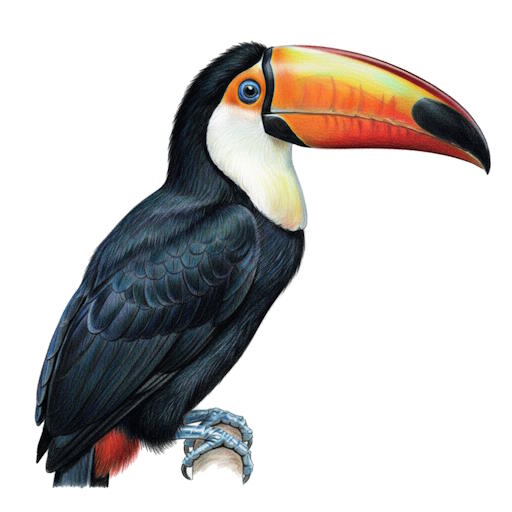
Toucan
Classification
Aves > Piciformes > Ramphastidae > Ramphastos > R. toco
Native To
Conservation Status
Average Height
2 feet
(0.6 m)
Average Weight
1 - 2 lbs
(0.5 - 0.9 kg)
Average Life Span
10 - 20 years
Gestation Period
16 days
Did You Know?
The Toucan is known for its remarkably large, colorful beak, which can be up to half the length of its body!
Despite its size, the Toucan's beak is very light because it's mostly hollow, made of a spongy bone-like material.
Toucans primarily eat fruit, but they are also opportunistic feeders and will eat insects, small birds, and eggs.
They use their long beaks to reach fruits on branches that wouldn't support their weight.
Toucans live in tropical and subtropical regions of Central and South America.
There are over 40 different species of Toucans, each with unique coloration.
Photo Gallery
No images provided yet. Be the first to upload one!