Waigeo Cuscus
The Waigeo Cuscus Spilocuscus papuensis is a species of cuscus, a type of marsupial, native to the island of Waigeo in Indonesia. It is a small and arboreal animal, spending most of its life in the trees.
The Waigeo Cuscus is known for its prehensile tail, which it uses as a fifth limb for grasping and climbing. It has large, forward-facing eyes, which help it to see in the dark.
The Waigeo Cuscus is a nocturnal animal that feeds on a wide variety of fruits, leaves, and flowers. It is an important part of its ecosystem, as it helps to disperse seeds. The Waigeo Cuscus is a vulnerable species, facing threats from habitat loss and hunting. The Waigeo Cuscus's unique adaptations and its life in the trees make it a fascinating and important animal of the rainforest.
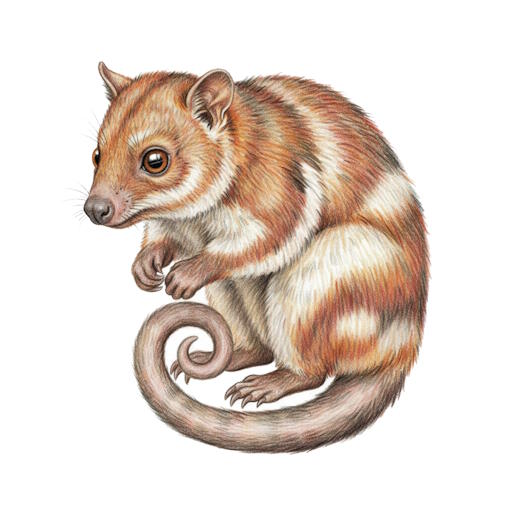
Waigeo Cuscus
Classification
Mammalia > Diprotodontia > Phalangeridae > Spilocuscus > S. papuensis
Native To
Conservation Status
Average Height
1.5 - 2 feet
(0.5 - 0.6 m)
Average Weight
5 - 10 lbs
(2.3 - 4.5 kg)
Average Life Span
8 - 10 years
Gestation Period
20 - 25 days
Did You Know?
The Waigeo Cuscus is a type of marsupial found on Waigeo Island in Indonesia.
They are nocturnal and spend most of their lives in trees, using their prehensile tail to grip branches.
Waigeo Cuscuses primarily eat leaves, fruits, and flowers.
They have large, forward-facing eyes, which help them see in the dark.
Their fur can range in color from reddish-brown to gray.
Photo Gallery
No images provided yet. Be the first to upload one!