Wombat
The Wombat Vombatidae is a family of burrowing marsupials native to Australia. There are three species of wombat, all of which are known for their powerful claws, which they use to dig extensive burrow systems. The Wombat has a unique, backward-facing pouch, which helps to keep the dirt out while it is digging.
Wombats are solitary and nocturnal animals, spending their nights foraging for grasses and roots. The Wombat is a true "ecosystem engineer," as its digging habits help to aerate the soil and to create habitats for other animals.
The Wombat's powerful digging skills and its unique pouch make it a fascinating and important animal of the Australian bush.
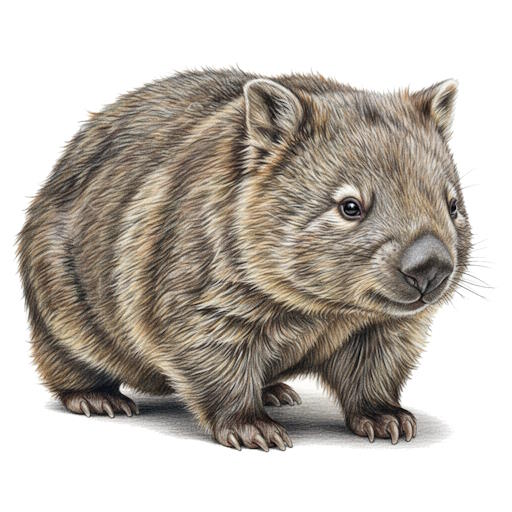
Wombat
Classification
Mammalia > Diprotodontia > Vombatidae > Vombatus > V. ursinus
Native To
Conservation Status
Average Height
2.5 - 3 feet
(0.8 - 0.9 m)
Average Weight
50 - 75 lbs
(23 - 34 kg)
Average Life Span
15 - 20 years
Gestation Period
20 - 22 days
Did You Know?
The Wombat is a marsupial native to Australia, known for its short, muscular legs and sharp claws, which are perfect for digging extensive burrow systems.
Unlike most marsupials, Wombats have backward-facing pouches, which helps prevent dirt from getting into the pouch while they are digging.
Wombats have a unique defense mechanism: their rear end is covered in thick skin and bone, which they can use to block the entrance to their burrow or crush an attacker's head against the roof of their tunnel.
They produce cube-shaped scat (poop), which is unique among mammals and helps prevent their droppings from rolling away, making it easier to mark their territory.
Wombats are primarily nocturnal herbivores, feeding on grasses, roots, and shrubs.
Photo Gallery
No images provided yet. Be the first to upload one!