Woolly Mammoth
The Woolly Mammoth Mammuthus primigenius was a species of mammoth that lived during the Ice Age. It was a massive and powerful animal, known for its long, curved tusks and its thick, shaggy coat, which helped it to survive in the cold climate.
The Woolly Mammoth was a herbivore, feeding on a wide variety of grasses and other plants. The Woolly Mammoth was a common and widespread species, with a range that covered much of North America and Eurasia. The extinction of the Woolly Mammoth is thought to have been caused by a combination of climate change and human hunting.
The Woolly Mammoth's massive size and its place in the Ice Age ecosystem make it a true icon of the prehistoric world.
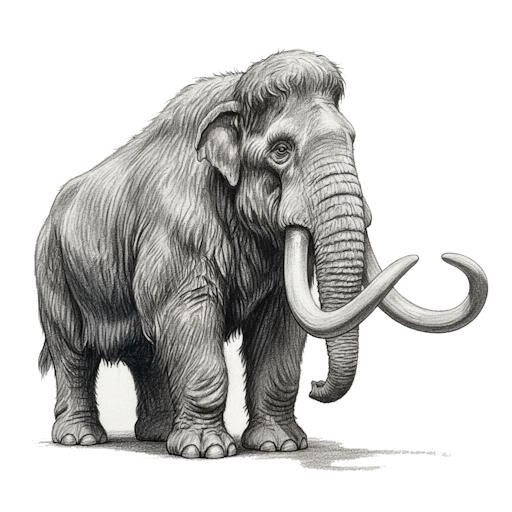
Woolly Mammoth
Classification
Mammalia > Proboscidea > Elephantidae > Mammuthus > M. primigenius
Native To
Conservation Status
Average Height
9 - 11 feet
(2.7 - 3.4 m)
Average Weight
10,000 - 12,000 lbs
(4,500 - 5,400 kg)
Average Life Span
60 - 80 years
Gestation Period
660 days
Diet
Herbivore (grasses, sedges, shrubs)
Social Structure
Herd
Biomes
(And Habitats)
Boreal Forest (Taiga) and Tundra and Polar
(Taiga and Tundra)
Did You Know?
The Woolly Mammoth lived during the last Ice Age and was well-adapted to cold environments, with a thick coat of shaggy hair and a layer of insulating fat.
They had long, curved tusks that could grow up to 15 feet long, which they likely used for digging in snow for food and for fighting.
Woolly Mammoths were herbivores, primarily eating grasses, sedges, and shrubs found in the steppes of their habitat.
They are closely related to modern elephants and are thought to have gone extinct around 4,000 years ago, possibly due to climate change and human hunting.
Many well-preserved Woolly Mammoth remains, including soft tissue, have been found in the permafrost of Siberia.
Photo Gallery
No images provided yet. Be the first to upload one!