Yellow-bellied Glider
The Yellow-bellied Glider Petaurus australis is a species of gliding marsupial native to the forests of eastern Australia. It is a large and graceful animal, known for its gliding membrane, or "patagium," which stretches from its wrists to its ankles.
The Yellow-bellied Glider can glide for distances of over 300 feet, steering with its long, bushy tail. As its name suggests, it has a yellow or orange patch on its belly. The Yellow-bellied Glider is a highly social animal that lives in small family groups. It is a nocturnal animal, and its diet consists mainly of nectar, sap, and insects.
The Yellow-bellied Glider is a vulnerable species, facing threats from habitat loss. The Yellow-bellied Glider's unique gliding ability and its social nature make it a fascinating and important animal of the Australian forest.
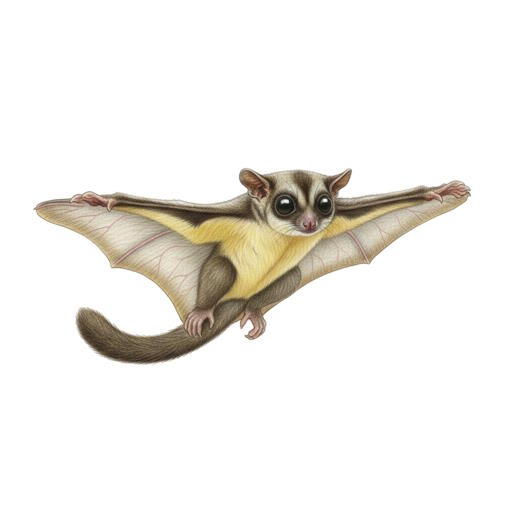
Yellow-bellied Glider
Classification
Mammalia > Diprotodontia > Petauridae > Petaurus > P. australis
Native To
Conservation Status
Average Height
1 - 1.5 feet
(0.3 - 0.5 m)
Average Weight
1 - 2 lbs
(0.5 - 0.9 kg)
Average Life Span
10 - 15 years
Gestation Period
21 days
Did You Know?
The Yellow-bellied Glider is a nocturnal marsupial native to eastern Australia.
They get their name from the yellowish-orange patch of fur on their belly and their ability to glide between trees using a membrane called a patagium.
Yellow-bellied Gliders can glide up to 100 meters (330 feet) between trees.
They are highly vocal and communicate through a variety of calls, including a distinctive shriek.
Their diet primarily consists of nectar, pollen, and insects, which they obtain by gnawing on tree bark to create sap-feeding sites.
Yellow-bellied Gliders live in family groups and share dens in tree hollows.
Photo Gallery
No images provided yet. Be the first to upload one!