Anaconda
The Anaconda is a genus of large, non-venomous snakes native to the tropical regions of South America. The Green Anaconda is the largest and most famous species, and it is known for being the heaviest snake in the world.
Anacondas are semi-aquatic snakes that spend most of their lives in the slow-moving waters of rivers and swamps. Their eyes and nostrils are located on top of their head, allowing them to wait for prey while remaining almost entirely submerged.
They are powerful constrictors that ambush their prey, wrapping their muscular bodies around it to suffocate it before swallowing it whole. Their diet can include a variety of animals, from birds and fish to capybaras and caimans.
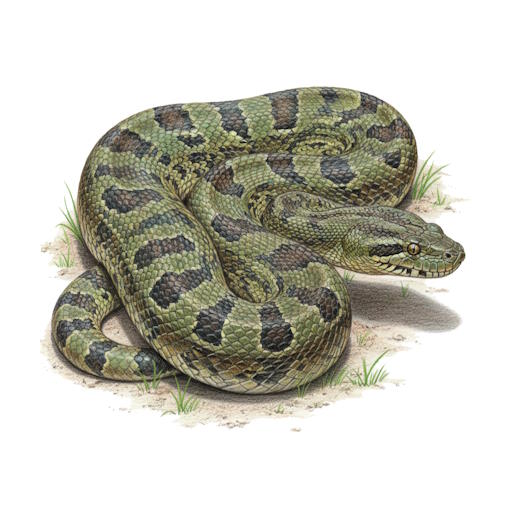
Anaconda
Native To
Conservation Status
Average Height
15 - 20 feet
(4.6 - 6.1 m)
Average Weight
500 lbs
(227 kg)
Average Life Span
10 - 15 years
Gestation Period
6 - 7 months
Did You Know?
The Anaconda is the largest snake in the world by weight and one of the longest.
They are semi-aquatic snakes, spending much of their time in the slow-moving waters of South American rivers and swamps.
Anacondas are constrictors, meaning they suffocate their prey by coiling around them.
Their eyes and nostrils are located on the top of their heads, allowing them to see and breathe while mostly submerged.
Female Anacondas are generally much larger than males.
They give birth to live young, rather than laying eggs.
While they can eat large prey, their diet mostly consists of fish, birds, and other reptiles.
Photo Gallery
No images provided yet. Be the first to upload one!