Baboon
The Baboon is a large and highly social monkey native to Africa and the Arabian Peninsula. They are known for their powerful build, their long snouts, and their large, sharp canine teeth.
Baboons live in large, complex social groups called troops. They have a sophisticated social hierarchy and a wide range of vocalizations and gestures to communicate with each other.
Baboons are Omnivore, with a diet that includes fruits, leaves, insects, and small animals. They are highly intelligent and adaptable animals that can thrive in a variety of habitats, from savannas to mountains.
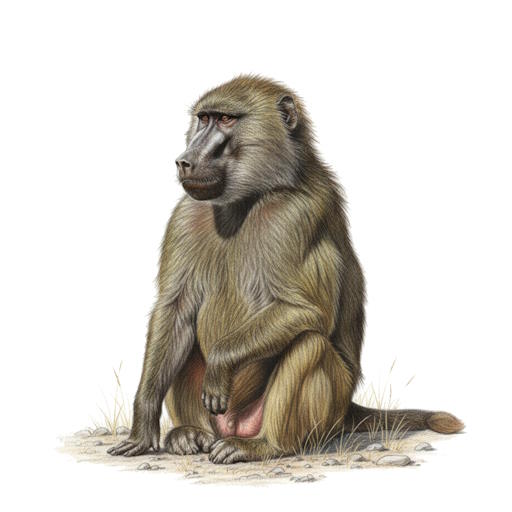
Baboon
Classification
Mammalia > Primates > Cercopithecidae > Papio > P. anubis
Native To
Conservation Status
Average Height
2 - 2.5 feet
(0.6 - 0.8 m)
Average Weight
50 - 80 lbs
(23 - 36 kg)
Average Life Span
20 - 30 years
Gestation Period
180 days
Did You Know?
The Baboon is a type of Old World monkey known for its dog-like snout and powerful jaws.
There are five species of Baboons, and they are found in various habitats across Africa and parts of Arabia.
Baboons are highly social animals and live in large groups called troops, which can consist of dozens to hundreds of individuals.
They are omnivores, eating a diverse diet that includes fruits, leaves, roots, insects, and even small animals.
Baboons are very intelligent and adaptable, able to learn and solve problems in their environment.
They communicate using a wide range of vocalizations, facial expressions, and body postures.
Female Baboons typically give birth to a single infant after a gestation period of about six months.
Young Baboons stay close to their mothers for several months and are cared for by other females in the troop.
Some species of Baboons, like the Hamadryas Baboon, have a strict social hierarchy with dominant males.
Photo Gallery
No images provided yet. Be the first to upload one!