Black-footed Albatross
The Black-footed Albatross is a species of seabird native to the North Pacific Ocean. It is known for its long, slender wings that allow it to glide for hours and even days without flapping its wings.
The Black-footed Albatross is a true wanderer of the seas, traveling thousands of miles in search of food. Its diet consists of squid, fish, and other marine life. It is a vital part of the marine ecosystem, but its numbers have been declining due to threats like longline fishing, where it can get tangled in fishing lines.
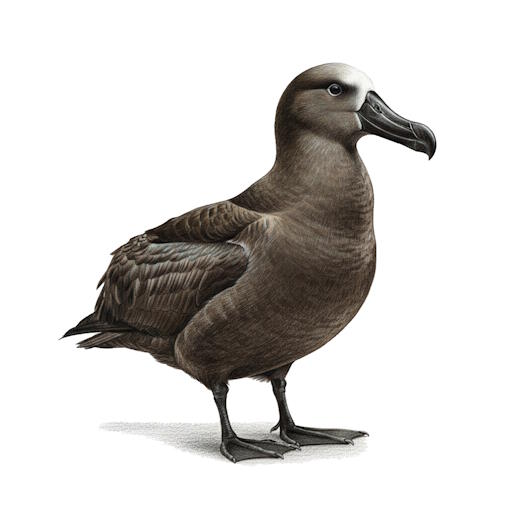
Black-footed Albatross
Classification
Aves > Procellariiformes > Diomedeidae > Phoebastria > P. nigripes
Native To
Conservation Status
Average Height
2.5 - 3 feet
(0.8 - 0.9 m)
Average Weight
6 - 8 lbs
(2.7 - 3.6 kg)
Average Life Span
50 years
Gestation Period
65 days
Did You Know?
The Black-footed Albatross can spend years at sea without touching land.
They are excellent long-distance flyers, using dynamic soaring to conserve energy.
These albatrosses have a strong sense of smell, which they use to locate food sources like squid and fish.
Their distinctive black feet and dark plumage help them absorb heat from the sun while resting on the water.
The Black-footed Albatross nests on remote oceanic islands, often creating shallow scrapes on the ground.
Chicks are fed a rich, oily substance called stomach oil by their parents.
Sadly, this species is considered endangered due to threats like bycatch in fisheries and plastic pollution.
They can live for over 30 years in the wild.
The Black-footed Albatross has a unique courtship ritual involving bowing, preening, and bill-clapping.
Photo Gallery
No images provided yet. Be the first to upload one!