Echidna
The Echidna, also known as the Spiny Anteater, is a unique and fascinating mammal native to Australia and New Guinea. It is a member of the monotreme family, which are mammals that lay eggs.
The Echidna is known for its spiny, porcupine-like body and its long, sticky snout. It is a nocturnal and solitary animal that forages for a variety of insects, including ants and termites. The Echidna is a true marvel of nature and a vital part of its ecosystem.
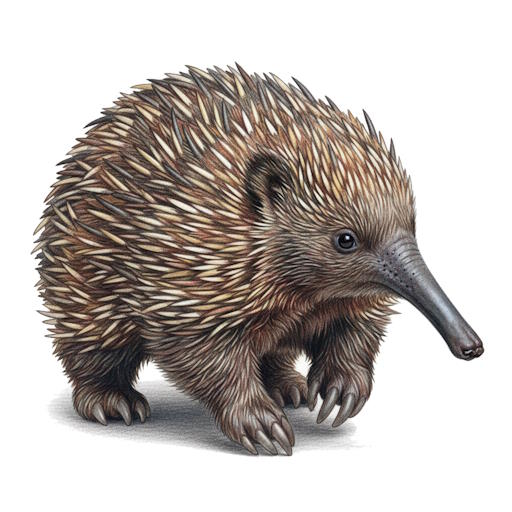
Echidna
Classification
Mammalia > Monotremata > Tachyglossidae > Tachyglossus > T. aculeatus
Native To
Conservation Status
Average Height
1 - 1.5 feet
(0.3 - 0.5 m)
Average Weight
5 - 15 lbs
(2.3 - 6.8 kg)
Average Life Span
40 - 50 years
Gestation Period
21 - 28 days
Did You Know?
The Echidna is a monotreme, meaning it is one of only two mammals (the other being the platypus) that lay eggs!
Despite their spiky appearance, Echidnas are shy and usually curl into a ball when threatened, exposing their sharp spines.
They have a long, sticky tongue, sometimes up to 7 inches long, which they use to catch ants, termites, and other insects.
Echidnas are found in Australia and New Guinea.
They have very strong claws and are excellent diggers.
The body temperature of an Echidna is lower than most mammals, which helps them survive in varying climates.
There are four species of Echidnas, also known as spiny anteaters.
Photo Gallery
No images provided yet. Be the first to upload one!