Giant Anteater
The Giant Anteater is a unique and fascinating mammal native to the grasslands and forests of Central and South America. It is known for its long, slender snout and its long, sticky tongue, which it can extend to catch its primary food source: ants and termites.
The Giant Anteater is a vital part of its ecosystem, as it helps to control insect populations.
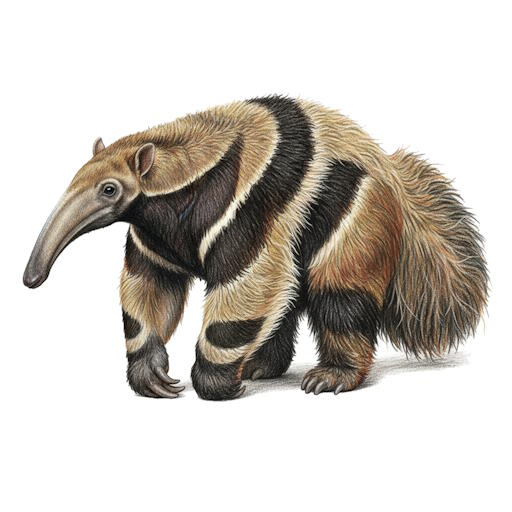
Giant Anteater
Classification
Mammalia > Pilosa > Myrmecophagidae > Myrmecophaga > M. tridactyla
Native To
Conservation Status
Average Height
3 - 4 feet
(0.9 - 1.2 m)
Average Weight
60 - 100 lbs
(27 - 45 kg)
Average Life Span
15 years
Gestation Period
190 days
Did You Know?
The Giant Anteater can eat up to 30,000 ants and termites in a single day!
They have a tongue that can extend up to two feet long and is covered in sticky saliva, perfect for catching insects.
Despite their name, Giant Anteaters have no teeth; they swallow their prey whole.
Their strong claws, used for digging into termite mounds, are so powerful they can even defend against predators like jaguars.
Giant Anteaters are mostly solitary animals and are found in grasslands and rainforests of Central and South America.
They can sleep for up to 15 hours a day.
When threatened, a Giant Anteater can stand on its hind legs and use its sharp claws for defense.
Photo Gallery
No images provided yet. Be the first to upload one!