Hoolock Gibbon
The Hoolock Gibbon is a species of primate native to the tropical forests of Northeast India, Myanmar, and Bangladesh. Known for their long, slender arms, they are masters of brachiation, or swinging from branch to branch with incredible speed and grace. Their acrobatic movements are a breathtaking sight. These apes live in small family groups and are highly territorial. They mark their territory with loud, elaborate "songs" or calls that can be heard for miles. Both males and females sing, but the male's call is particularly striking.
Unfortunately, Hoolock Gibbons are an endangered species, facing threats from habitat loss due to deforestation and illegal poaching. Conservation efforts are crucial to the survival of this elegant and vocal ape.
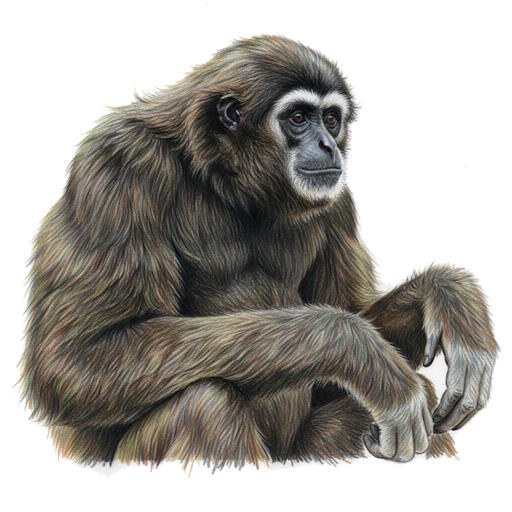
Hoolock Gibbon
Classification
Mammalia > Primates > Hylobatidae > Hoolock > H. hoolock
Native To
Conservation Status
Average Height
2 - 2.5 feet
(0.6 - 0.8 m)
Average Weight
12 - 17 lbs
(5.4 - 7.7 kg)
Average Life Span
25 - 30 years
Gestation Period
210 days
Did You Know?
The Hoolock Gibbon is the only ape species found in India.
They are known for their incredibly long arms, which they use to swing through trees with amazing agility.
Hoolock Gibbons have a distinctive vocalization, a loud and complex song that can be heard over long distances, often used for communication between groups or to mark territory.
There are two main species of Hoolock Gibbon: the Western Hoolock Gibbon and the Eastern Hoolock Gibbon.
Their diet primarily consists of fruits, leaves, and insects.
Hoolock Gibbons live in small family groups, typically consisting of a monogamous pair and their offspring.
They are arboreal, meaning they spend most of their lives in trees.
Photo Gallery
No images provided yet. Be the first to upload one!