Hummingbird
Hummingbirds are a family of tiny birds found only in the Americas. They are known for their incredibly fast wing beats, which can range from 12 to 80 beats per second depending on the species. This rapid flapping produces a characteristic humming sound, giving them their name. They are the only birds that can truly hover in mid-air and even fly backward.
Hummingbirds have a very high metabolism, burning calories so quickly that they must eat frequently throughout the day, visiting hundreds of flowers to consume nectar. To survive the night, they can enter a state of torpor, a deep sleep similar to hibernation, to conserve energy. Their long, slender beaks and specialized tongues are perfectly adapted for drinking nectar from flowers. Their vibrant, iridescent feathers are a product of light refraction, changing color depending on the angle of view.
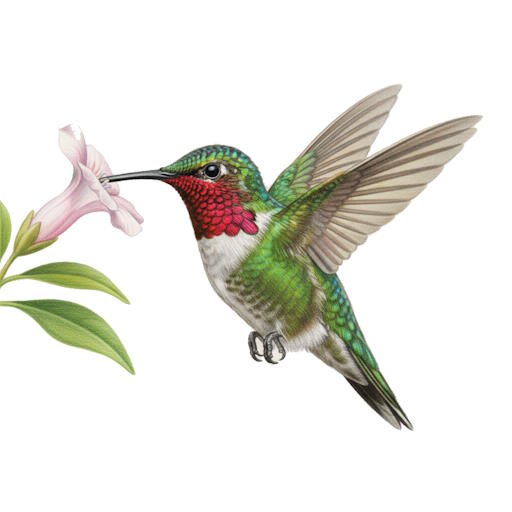
Hummingbird
Classification
Aves > Apodiformes > Trochilidae > Archilochus > A. colubris
Native To
Conservation Status
Average Height
3 - 4 inches
(8 - 10 cm)
Average Weight
0.1 - 0.2 oz
(3 - 6 g)
Average Life Span
3 - 5 years
Gestation Period
16 - 18 days
Did You Know?
The Hummingbird is the smallest bird in the world, with some species weighing less than a penny!
They can beat their wings up to 80 times per second, creating a humming sound.
Hummingbirds are the only birds that can fly backward and hover in mid-air.
They have a very high metabolism and need to eat frequently, sometimes visiting hundreds of flowers in a single day.
Their long, slender beaks and specialized tongues are perfect for reaching nectar deep inside flowers.
Some Hummingbirds can migrate thousands of miles, despite their tiny size.
Photo Gallery
No images provided yet. Be the first to upload one!