Japanese Macaque
The Japanese Macaque (Macaca fuscata), also known as the "snow monkey," is a species of Old World monkey native to Japan. They are famous for their ability to thrive in cold climates, and in certain regions, they have developed a unique cultural behavior: bathing in natural hot springs during the cold winter months to stay warm. This is one of the few instances of an animal adopting a learned cultural behavior.
Japanese Macaques are social animals, living in troops with a complex social structure. They are Omnivore, with a diet that includes fruits, seeds, insects, and leaves. They are highly intelligent and have been the subject of numerous studies on animal behavior and intelligence.
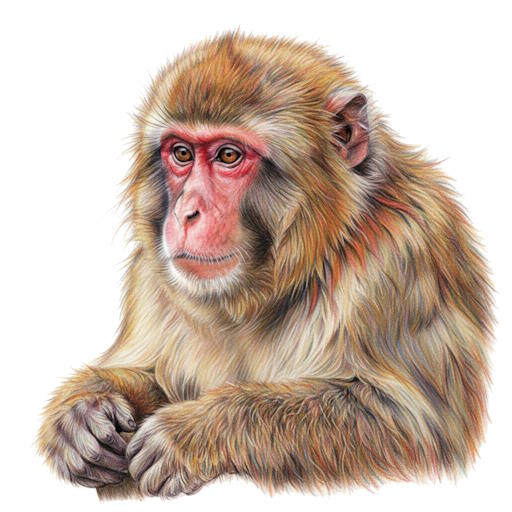
Japanese Macaque
Classification
Mammalia > Primates > Cercopithecidae > Macaca > M. fuscata
Native To
Conservation Status
Average Height
2 - 2.5 feet
(0.6 - 0.8 m)
Average Weight
20 - 30 lbs
(9 - 14 kg)
Average Life Span
20 - 30 years
Gestation Period
170 days
Did You Know?
The Japanese Macaque, also known as the snow monkey, is native to Japan and is famous for bathing in natural hot springs during winter.
These highly intelligent monkeys have a complex social structure and have even been observed washing their food before eating it.
Japanese Macaques are the most northern-living non-human primates in the world.
They can survive in temperatures as low as -15°C (5°F) thanks to their thick fur.
Their diet is very diverse and includes leaves, buds, fruits, seeds, insects, and even small invertebrates.
Japanese Macaques communicate through various vocalizations and body language.
Young macaques learn behaviors like hot spring bathing from their mothers and other members of their troop.
Photo Gallery
No images provided yet. Be the first to upload one!