King Snake
The King Snake (Lampropeltis) is a genus of non-venomous snakes found throughout North and Central America. They are named "king" because of their impressive ability to prey on other snakes, including venomous ones like rattlesnakes, copperheads, and cottonmouths.
King Snakes are immune to the venom of these snakes, making them a crucial predator in the ecosystem. They are constrictors, wrapping their bodies around their prey to suffocate them before eating them whole.
King Snakes come in a variety of patterns and colors, but many species have a black and white or black and red banded pattern that can mimic the appearance of a venomous coral snake, a form of mimicry that helps to protect them from predators.
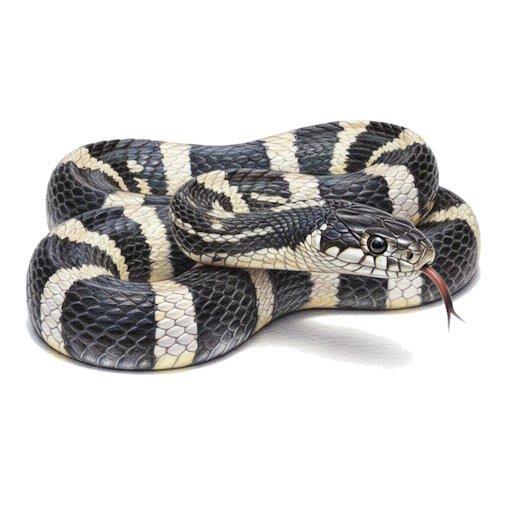
King Snake
Classification
Reptilia > Squamata > Colubridae > Lampropeltis > L. getula
Native To
Conservation Status
Average Height
3 - 4 feet
(0.9 - 1.2 m)
Average Weight
2 - 3 lbs
(0.9 - 1.4 kg)
Average Life Span
15 - 20 years
Gestation Period
50 - 60 days
Diet
Carnivore (snakes, rodents, birds)
Social Structure
Solitary
Biomes
(And Habitats)
Desert and Arid and Grassland and Savanna and Temperate Forest
(Deserts, Forests and Grasslands)
Did You Know?
The King Snake is known for its ability to eat other snakes, including venomous ones, as it is immune to their venom!
They are found throughout North and Central America, living in a variety of habitats from forests to deserts.
King Snakes are constrictors, meaning they squeeze their prey until it can no longer breathe.
Their diet includes rodents, birds, lizards, and other snakes.
King Snakes often mimic the coloring of venomous coral snakes, a form of mimicry that helps deter predators.
They can grow to be quite long, with some species reaching over 6 feet in length.
King Snakes are generally docile and are popular pets.
Photo Gallery
No images provided yet. Be the first to upload one!