Kiwi
The Kiwi is a genus of small, flightless, and nocturnal birds endemic to New Zealand. They are a national symbol of New Zealand and are as unique as their homeland.
Kiwis have a long, flexible beak with nostrils at the tip, which they use to probe the ground for insects and worms. They are the only birds with nostrils at the end of their beaks. Their feathers are more like hair than typical feathers, and they have powerful legs and a strong sense of smell.
Kiwis are a vulnerable species, facing threats from introduced predators like stoats, cats, and dogs. Intensive conservation efforts are underway to protect these unique birds and ensure their survival.
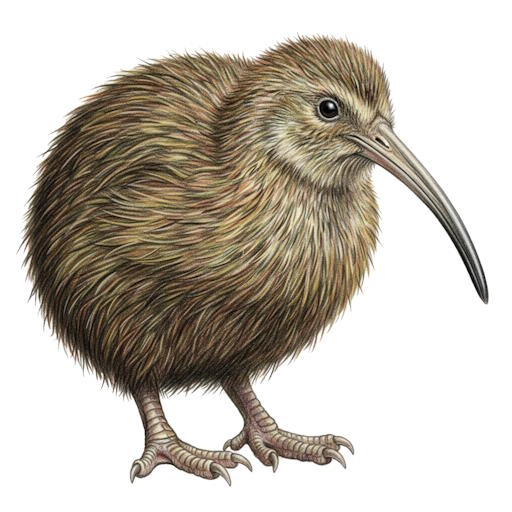
Kiwi
Classification
Aves > Apterygiformes > Apterygidae > Apteryx > A. australis
Native To
Conservation Status
Average Height
1.5 feet
(0.5 m)
Average Weight
2 - 4 lbs
(0.9 - 1.8 kg)
Average Life Span
20 - 50 years
Gestation Period
70 - 80 days
Diet
Omnivore (insects, worms, fruits)
Social Structure
Pair bond
Biomes
(And Habitats)
Desert and Arid and Temperate Forest
(Forests and Scrublands)
Did You Know?
The Kiwi is a unique, flightless bird native to New Zealand, and is the smallest living ratite (a group of flightless birds that includes ostriches and emus).
Unlike most birds, the Kiwi has nostrils at the end of its long beak, which it uses to sniff out insects and worms underground.
Kiwi birds are nocturnal, meaning they are most active at night, foraging for food.
Despite being a bird, the Kiwi lays the largest egg in relation to its body size of any bird in the world.
They have whisker-like feathers around their face, which help them navigate in the dark.
Photo Gallery
No images provided yet. Be the first to upload one!