Red-crowned Crane
The Red-crowned Crane Grus japonensis, also known as the Japanese Crane, is a large crane species found in East Asia. It is one of the world's rarest cranes and is revered in many cultures as a symbol of good luck, loyalty, and longevity. The crane is easily identified by its pure white body, black plumage on its wings and neck, and a distinctive patch of bare, red skin on its crown.
Red-crowned Cranes are known for their spectacular and complex mating dances, which involve bowing, leaping, and calling. They are monogamous and form a strong pair bond that lasts for life. These cranes live in wetlands and marshes, feeding on insects, fish, and small amphibians. They are a migratory species, breeding in Russia and China and spending their winters in Japan and Korea. While their populations are slowly recovering thanks to conservation efforts, they still face threats from habitat loss and human disturbance.
In Japan, the Red-crowned Crane is a national symbol and is the subject of countless works of art and folklore. Its elegant beauty and graceful movements make it a truly magnificent bird.
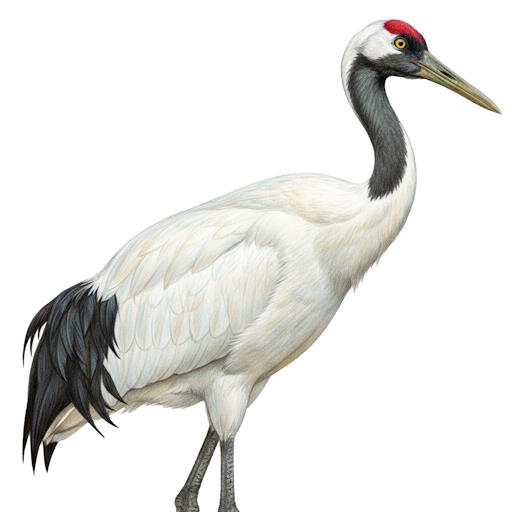
Red-crowned Crane
Classification
Aves > Gruiformes > Gruidae > Grus > G. japonensis
Conservation Status
Average Height
5 feet
(1.5 m)
Average Weight
15 - 25 lbs
(6.8 - 11.3 kg)
Average Life Span
30 - 40 years
Gestation Period
30 days
Did You Know?
The Red-crowned Crane is one of the rarest cranes in the world.
They are symbols of luck, longevity, and fidelity in Asian cultures.
Red-crowned Cranes are known for their elaborate and graceful courtship dances.
They can live for up to 60 years in captivity.
Their diet primarily consists of insects, fish, amphibians, and plants.
Red-crowned Cranes are highly vocal, with a loud, trumpeting call.
They build their nests in wetlands, often in shallow water.
The red patch on their head is actually bare skin, not feathers, and can change intensity with emotion.
Photo Gallery
No images provided yet. Be the first to upload one!