Sandhill Crane
The Sandhill Crane Antigone canadensis is a large species of crane native to North America. It is known for its long legs, long neck, and reddish-brown plumage, which is often stained with iron-rich mud.
The most distinctive feature of the Sandhill Crane is the patch of bare, red skin on its forehead.
Sandhill Cranes are known for their spectacular migratory journeys, flying in large flocks that can number in the thousands. They are also famous for their elaborate courtship dances, which involve bowing, leaping, and calling. These dances are a powerful display of their bond and are a highlight of the spring mating season. Sandhill Cranes are Omnivore, feeding on a wide variety of foods, including seeds, grains, insects, and small animals. While their populations are generally stable, they still face threats from habitat loss and human development.
The Sandhill Crane's impressive migrations and beautiful dances make it a true symbol of the wild, open spaces of North America.
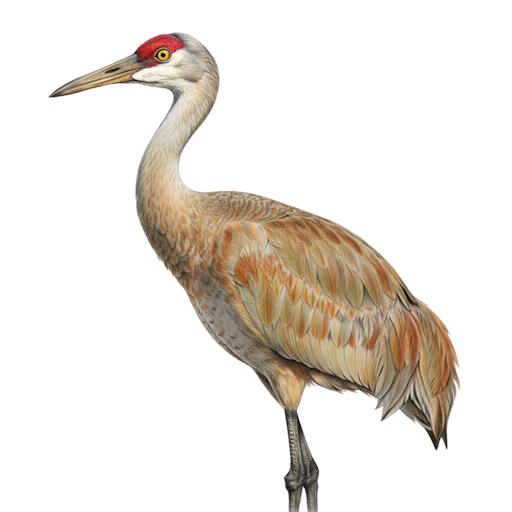
Sandhill Crane
Classification
Aves > Gruiformes > Gruidae > Antigone > A. canadensis
Native To
Conservation Status
Average Height
3.5 - 4 feet
(1.1 - 1.2 m)
Average Weight
7 - 12 lbs
(3.2 - 5.4 kg)
Average Life Span
20 - 25 years
Gestation Period
29 - 32 days
Did You Know?
The Sandhill Crane is one of the oldest living bird species, with a fossilized crane found in Nebraska dating back 2.5 million years!
They are known for their spectacular courtship dances, which involve bowing, jumping, and wing flapping.
Sandhill Cranes have a distinctive loud, trumpeting call that can be heard for miles.
They are highly migratory birds, traveling thousands of miles between their breeding and wintering grounds.
Their diet is varied and includes grains, insects, small mammals, and even reptiles.
Sandhill Cranes often forage in agricultural fields after crops have been harvested.
The rusty color on their feathers comes from iron-rich mud that they preen onto themselves.
Photo Gallery
No images provided yet. Be the first to upload one!