Siamang
The Siamang Symphalangus syndactylus is a species of gibbon native to the rainforests of Malaysia, Indonesia, and Thailand. It is the largest of the gibbons and is known for its large, inflatable throat pouch, or "gular sac," which it uses to produce powerful, booming calls. These calls, which can be heard for miles, are used to communicate with other Siamangs and to mark their territory.
Siamangs are arboreal, spending most of their lives in the trees. They are famous for their "brachiation," a form of locomotion where they swing from branch to branch with incredible speed and agility. Their diet consists mainly of fruits, leaves, and insects. The Siamang is a highly social animal that lives in small family groups. It is an endangered species, facing threats from habitat loss and the illegal pet trade.
The Siamang's powerful voice and graceful movements make it a true symbol of the wild, rich forests of Southeast Asia.
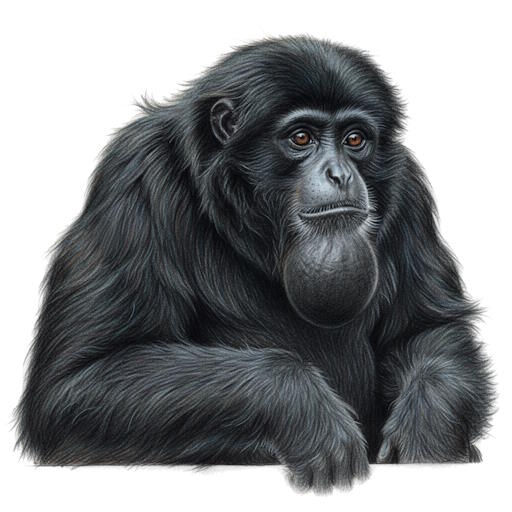
Siamang
Classification
Mammalia > Primates > Hylobatidae > Symphalangus > S. syndactylus
Native To
Conservation Status
Average Height
2 - 3 feet
(0.6 - 0.9 m)
Average Weight
20 - 30 lbs
(9 - 14 kg)
Average Life Span
30 - 40 years
Gestation Period
225 - 235 days
Did You Know?
The Siamang is a type of gibbon, known for being the largest of the gibbon species.
They have a large throat sac called a gular sac, which inflates to help them make incredibly loud calls and songs that can be heard up to 2 miles away!
Siamangs are arboreal, meaning they spend most of their lives in trees, swinging through the forest canopy with their long arms.
Their diet primarily consists of fruit, leaves, and insects.
Siamangs form strong pair bonds and live in small family groups, usually consisting of a mated pair and their offspring.
They are found in the rainforests of Malaysia, Thailand, and Indonesia.
Sadly, Siamangs are endangered due to habitat loss from deforestation.
Photo Gallery
No images provided yet. Be the first to upload one!