Three-toed Sloth
The Three-toed Sloth Bradypus is a genus of sloths native to the rainforests of Central and South America. It is a famously slow-moving mammal, known for its three toes on each of its feet.
The Three-toed Sloth is a specialist feeder, with a diet that consists almost entirely of leaves. Its slow movements and low metabolic rate are a result of its low-energy diet.
The Three-toed Sloth is a highly arboreal animal, spending its life in the forest canopy. It is an important part of the rainforest ecosystem, as it helps to disperse seeds and control the growth of plant life. While the Three-toed Sloth is not currently considered endangered, it does face threats from habitat loss and fragmentation.
The Three-toed Sloth's unique adaptations and peaceful nature make it a beloved and iconic animal of the rainforest.
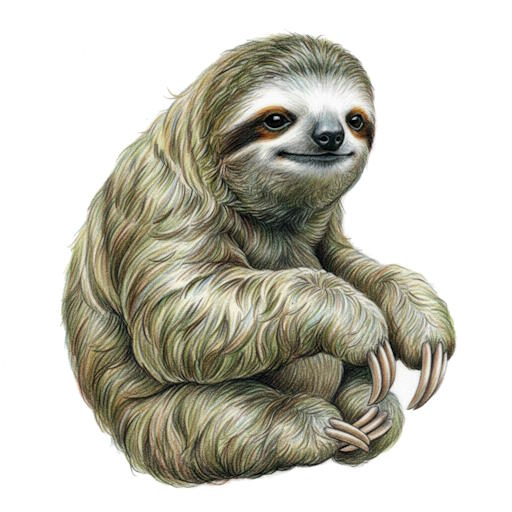
Three-toed Sloth
Classification
Mammalia > Pilosa > Bradypodidae > Bradypus > B. variegatus
Native To
Conservation Status
Average Height
2 - 2.5 feet
(0.6 - 0.8 m)
Average Weight
8 - 17 lbs
(3.6 - 7.7 kg)
Average Life Span
20 - 30 years
Gestation Period
120 - 130 days
Did You Know?
The Three-toed Sloth is one of the slowest mammals on Earth, moving at a maximum speed of about 0.15 miles per hour on the ground.
Their diet consists mainly of leaves, which are very low in nutrients, contributing to their slow metabolism and energy conservation.
Three-toed Sloths spend almost their entire lives in trees, only descending to defecate, which they do about once a week.
They have specialized claws that help them hang upside down from branches for extended periods.
Despite their slow movement, Three-toed Sloths are surprisingly good swimmers.
Their fur often harbors algae, which gives them a greenish tint and helps them camouflage in the trees.
Three-toed Sloths have extra neck vertebrae, allowing them to turn their heads almost 270 degrees.
Photo Gallery
No images provided yet. Be the first to upload one!