Chapman's Zebra
Chapman's zebra is a very active and beautiful member of the plains zebra family. These zebras make their home in the open savannas and grassy plains of southern Africa, traveling in large herds to find the best food together. The coolest thing about Chapman's zebra is its very special stripe pattern. If you look closely between their dark black stripes, you will see lighter, brownish stripes. These are called 'shadow stripes.' Their legs also have fewer stripes toward the bottom, and they do not have stripes all the way down to their hooves.
As herbivores, their main job all day long is eating grass. Their teeth are specially designed to clip off the rough and tough top layer of grass that many other animals do not like. By eating the rough grass, they actually help out other animals like wildebeests who prefer the softer grass found underneath. This makes the Chapman's zebra a very helpful friend on the savanna. They spend many hours grazing, which is why they have large, strong jaws.
Chapman's zebras are very serious about their family groups, which are called harems. A strong male leads the group of females and their foals. When they are resting or sleeping, they use a very clever trick to stay safe. They sleep in shifts! While some zebras stand or lie down to take a nap, at least one zebra stays awake inside the group to watch out for danger. With their excellent eyesight and hearing, the guard zebra can quickly alert the others if a lion is sneaking up.
Did you know that zebras do not neigh like regular horses? Chapman's zebras make a distinct barking or yipping noise that sounds a bit like a high-pitched dog bark! This is how they check in with each other to make sure everyone is safe. The foals, or baby zebras, are born with fuzzy brown and white stripes. They are very brave right from the start, learning to stand and run within their first hour of life.
Because they live on the hot savanna, staying cool is very important. Many scientists believe that the zebra's amazing stripes actually help create small breezes over their skin, working like a natural air conditioner. Plus, the stripes make it very confusing for hungry bugs, like horseflies, to land on them. Chapman's zebras are spectacular, tough, and perfectly designed for their sunny home in southern Africa.
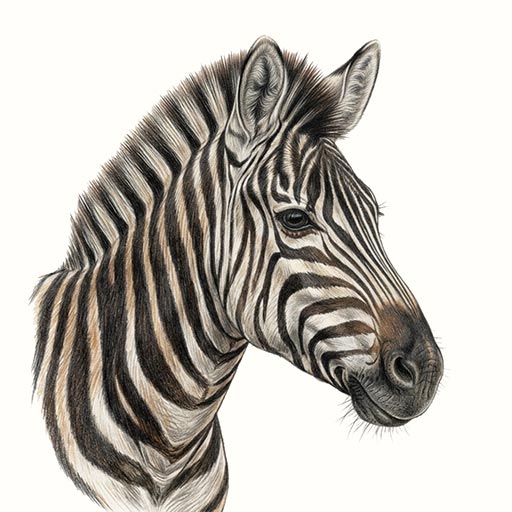
Chapman's Zebra
Classification
Mammalia > Perissodactyla > Equidae > Equus > quagga chapmani
Native To
Conservation Status
Average Height
3 to 5 feet
(0.91 to 1.52 meters)
Average Weight
500 - 800 lbs
(227 - 362 kg)
Average Life Span
25 - 30 years
Gestation Period
360 - 396 days
No fun facts available for this animal yet.
Photo Gallery
No images provided yet. Be the first to upload one!