Atlantic Ocean
The Atlantic Ocean is one of the largest oceans in the world. It stretches between North and South America to the west and Europe and Africa to the east. Its blue waters are home to many kinds of fish, whales, dolphins, sea turtles, and other sea life. The Atlantic Ocean helps connect countries, carries ships across the world, and plays an important part in Earth's weather and climate. From warm, sunny waters near the equator to cold waters near the Arctic, the Atlantic is filled with many different places for plants and animals to live.
General Geography & Location
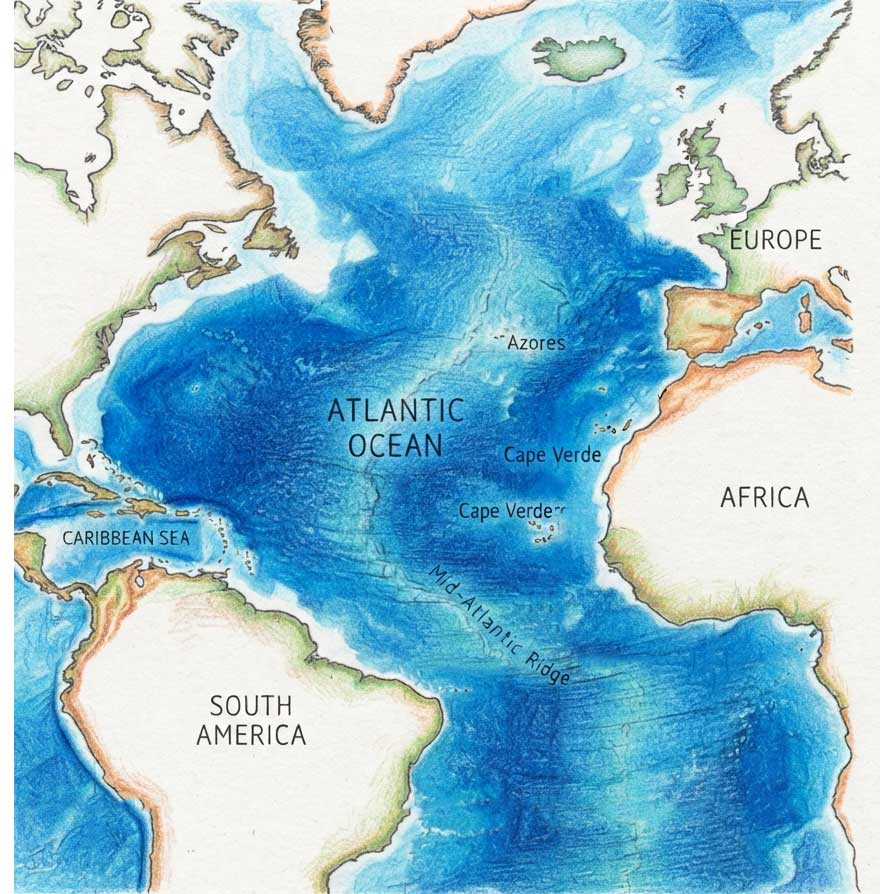
The Atlantic Ocean is the second-largest ocean on Earth, covering about 41 million square miles (106 million square kilometers). It stretches from the Arctic Ocean in the north to the Southern Ocean near Antarctica in the south. It lies between North America and South America on one side and Europe and Africa on the other. The Atlantic Ocean is so wide that it can take many days for a ship to cross it.
The ocean has many islands, bays, and seas. Some well-known areas include the Caribbean Sea, the Gulf of Mexico, and the Mediterranean Sea, which connects to the Atlantic through a narrow opening. The Atlantic also has a long underwater mountain range called the Mid-Atlantic Ridge. This mountain range runs down the middle of the ocean and is longer than the Andes Mountains on land. Much of it lies deep beneath the water, where people cannot see it.
The Atlantic Ocean is also important for weather. Warm and cold ocean water move around the world, helping carry heat from one place to another. This movement helps shape weather and climate in many countries. Hurricanes can also form over warm Atlantic waters and grow into powerful storms that may reach the Caribbean, Central America, or the eastern coast of North America.
Natural Habitats/Ecosystem
The Atlantic Ocean has many habitats, from shallow coastal waters to dark, deep parts of the ocean. Near the shore, sunlight reaches the bottom in some places, allowing sea plants and tiny living things to grow. These areas provide food and shelter for fish, crabs, sea turtles, and many other animals. Coral reefs in warm parts of the Atlantic are home to colorful fish and other sea life.
Farther from shore, the ocean becomes deeper and darker. Some animals live near the surface, while others live thousands of feet below where sunlight cannot reach. Deep-sea animals have special ways to survive in cold water, with little food and no sunlight. Some even make their own light!
The Atlantic Ocean is home to many amazing animals, including sharks, whales, dolphins, sea turtles, seals, and countless fish. Tiny living things called plankton float in the water and serve as food for many ocean animals. Even the largest whales depend on small sea life for food. Each plant and animal plays a part in keeping the ocean healthy.
The Atlantic Ocean is also important to people. It provides food, helps move goods between countries, and supports many coastal communities. Keeping the ocean clean helps protect the animals and plants that live there. Trash, pollution, and fishing that takes too many animals can harm ocean life and its habitats.
Conclusion
The Atlantic Ocean is a huge and amazing part of our planet. It connects continents, helps shape weather, and provides homes for many kinds of plants and animals. From colorful coral reefs to deep, dark waters, the Atlantic is full of places to explore and discover. Learning about the Atlantic Ocean helps us understand how water, wildlife, weather, and people are all connected, and why it is important to protect our oceans.
Other Continents and Locations
There are more locations to explore. See other locations where our animals live.
Animals found in Atlantic Ocean
Click on an image to learn more about one of the animals.
