Indian Ocean
The Indian Ocean is the third-largest ocean in the world and is known for its warm waters, beautiful islands, and amazing sea life. It lies between Africa, Asia, and Australia, and stretches south toward Antarctica. Many animals live in its waters, including whales, dolphins, sharks, sea turtles, and colorful reef fish. The Indian Ocean also has coral reefs, underwater mountains, and deep ocean valleys. It is the warmest of the world's oceans, making it an important home for many plants and animals. From sunny beaches to dark, deep waters, the Indian Ocean is full of interesting places to explore.
General Geography & Location
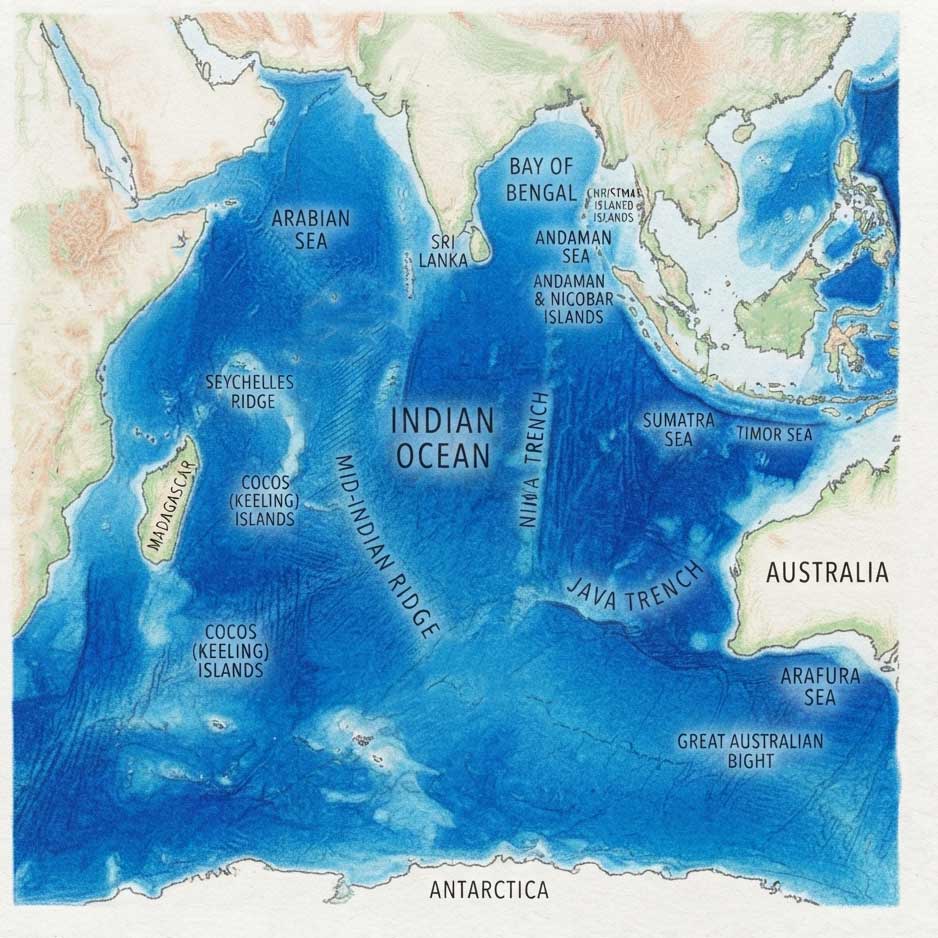
The Indian Ocean is the third-largest ocean on Earth, covering about 27 million square miles (70 million square kilometers). It is smaller than the Pacific and Atlantic Oceans but still covers a huge area of our planet. It lies between Africa to the west, Asia to the north, Australia to the east, and the Southern Ocean to the south.
The Indian Ocean has many islands, some of which are famous for their beautiful beaches and clear blue water. Madagascar, the Maldives, Seychelles, and Sri Lanka are among the islands found in or along the Indian Ocean. Some islands are home to tropical forests, while others have sandy shores, coral reefs, and warm waters filled with sea life.
The Indian Ocean also contains some interesting underwater features. The ocean floor has mountain ranges, deep valleys, and large areas of flat land far below the surface. The Java Trench is one of its deepest places, reaching more than 23,000 feet below the water. That is deeper than four miles! At these depths, sunlight cannot reach, and the water is cold and under great pressure.
The Indian Ocean is also known for its monsoon winds. These winds change direction during different parts of the year and help bring rain to many countries near the ocean. Monsoon rains are important for farms, plants, and people, but heavy rain can also cause flooding. The Indian Ocean helps shape the weather and climate of the places around it.
Natural Habitats/Ecosystem
The Indian Ocean has many different habitats that support a wide variety of plants and animals. Near the shore, shallow waters provide food and shelter for fish, crabs, sea turtles, and other sea creatures. Mangrove forests grow along some coastlines, where their tangled roots provide safe places for young fish and other animals to hide. Coral reefs are also found in warm parts of the Indian Ocean and are home to many colorful fish and sea life.
Farther out from shore, the open ocean is home to large animals such as whales, dolphins, sharks, tuna, and sea turtles. Tiny living things called plankton float through the water and provide food for many animals. Some fish travel long distances through the ocean to find food or lay their eggs. The Indian Ocean is also an important place for whales that travel to warmer waters to raise their young.
Deep beneath the surface, the Indian Ocean becomes a dark and cold world. Sunlight cannot reach the deepest parts, but life still exists there. Some deep-sea animals have large eyes, while others make their own light to help them find food or stay safe. These animals have special ways of surviving in a place where food is hard to find and the water pressure is very strong.
The Indian Ocean is important to people as well as wildlife. It provides food, supports fishing communities, and carries ships between countries. Many people depend on the ocean for their jobs and daily lives. Pollution, plastic trash, and harmful fishing practices can damage its habitats and hurt animals. Keeping the Indian Ocean clean helps protect the many plants and animals that call it home.
Conclusion
The Indian Ocean is a warm, beautiful, and important part of our planet. It is filled with islands, coral reefs, deep ocean valleys, and amazing wildlife. From mangrove forests along the shore to animals living in the dark depths, the Indian Ocean has many habitats to discover. It helps connect countries, supports people and wildlife, and plays an important role in Earth's weather. Learning about the Indian Ocean helps us understand how important oceans are and why we should protect them.
Other Continents and Locations
There are more locations to explore. See other locations where our animals live.
Animals found in Indian Ocean
Click on an image to learn more about one of the animals.
