Arctic Ocean
The Arctic Ocean is the smallest and coldest ocean in the world. It lies around the North Pole and is covered by ice during much of the year. Even though it is a cold and icy place, the Arctic Ocean is full of life. Polar bears, seals, whales, fish, and many other animals live in and around its waters. Some animals spend their lives swimming in the cold ocean, while others depend on the ice for food, shelter, or a place to rest. The Arctic Ocean is a special place where animals must find clever ways to survive in one of the coldest parts of the world.
General Geography & Location
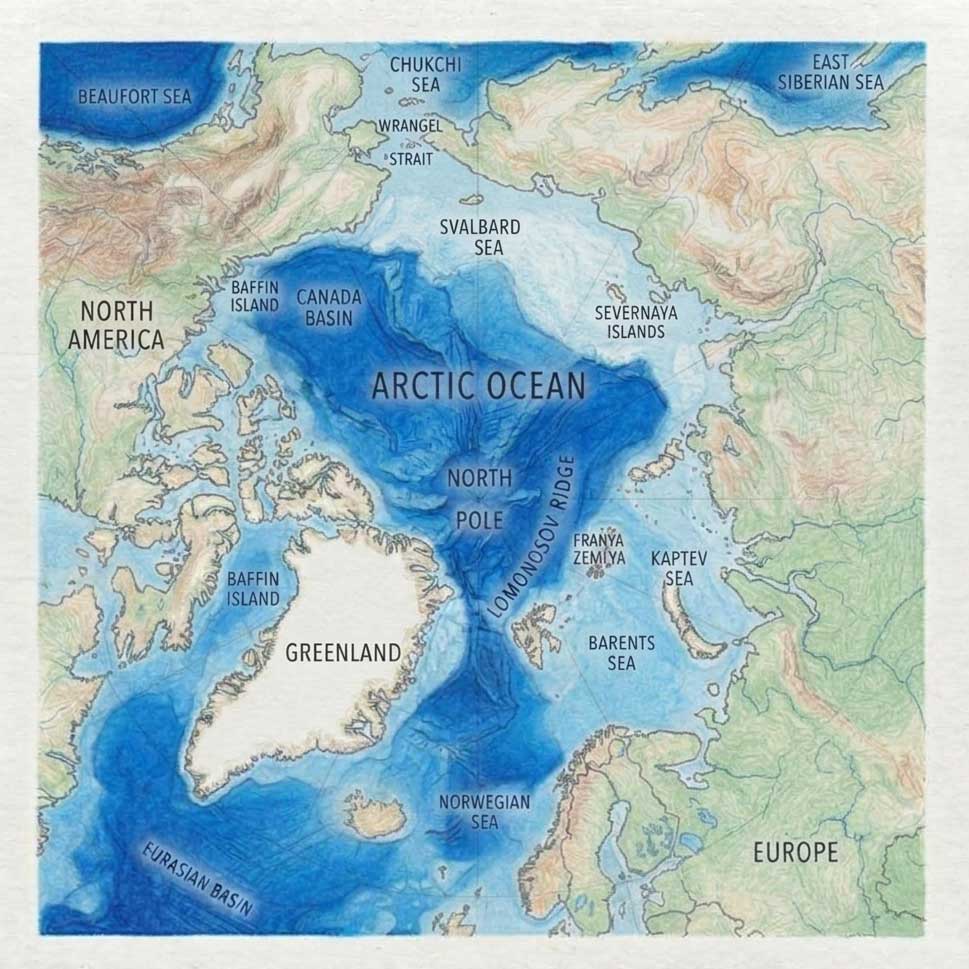
The Arctic Ocean is the smallest of the world's five oceans, covering about 6.1 million square miles (15.6 million square kilometers). Even though it is the smallest ocean, it is still about one and a half times the size of the United States! It is located at the top of the world, around the North Pole. The Arctic Ocean is surrounded by parts of North America, Europe, and Asia, including Alaska, Canada, Greenland, Norway, and Russia.
Much of the Arctic Ocean is covered by floating sea ice. This ice grows during the cold winter months and shrinks when temperatures rise in the summer. Unlike ice that forms on land, sea ice floats on top of the ocean. Some of this ice is only a few feet thick, while other areas can have thicker ice that has formed over many years. The ocean also contains deep valleys, underwater mountain ranges, and wide areas of shallow water near the land.
The Arctic Ocean is a place of extreme changes in daylight. During the summer, some areas near the North Pole have sunlight for 24 hours a day. This is called the midnight sun. During the winter, those same areas can have days or even months without sunlight. These long periods of light and darkness help make the Arctic one of the most unusual places on Earth.
The Arctic Ocean is also important to the world's weather and climate. Its ice reflects sunlight back into space, helping keep the Earth cool. Ocean water, ice, and winds all work together to move heat around the planet. As the Arctic warms and sea ice melts, it can affect weather, ocean conditions, and animals far beyond the Arctic itself.
Natural Habitats/Ecosystem
The Arctic Ocean may look like a frozen, empty place, but many plants and animals live there. Some life grows in the water, while other animals live on, under, or around the sea ice. Tiny organisms such as algae grow in the water and in small spaces within the ice. These organisms provide food for tiny animals called plankton, which are eaten by fish and other sea creatures.
Fish, seals, walruses, and whales live in the Arctic Ocean. Some animals spend much of their time underwater, while others come to the surface to breathe. Seals often rest on the ice, and walruses use their strong tusks to help pull themselves onto it. Polar bears are powerful swimmers and use the sea ice as a place to travel and hunt for food, especially seals.
The Arctic Ocean is also home to animals that have special ways of staying warm. Some have thick fur, while others have a layer of fat under their skin that helps keep their bodies warm in the icy water. Many Arctic animals have bodies that help them save heat, allowing them to survive in places where temperatures can drop far below freezing.
The Arctic Ocean is important to people, too. Many communities have lived in the Arctic for thousands of years and depend on the land and ocean for food, travel, and daily life. The ocean also helps control Earth's climate. However, rising temperatures are causing Arctic ice to melt more quickly. This can make it harder for animals that depend on ice to find food, rest, or raise their young. Keeping the Arctic Ocean healthy helps protect its wildlife and the people who call this region home.
Conclusion
The Arctic Ocean is a cold, icy, and amazing part of our planet. Although it is the smallest ocean, it is filled with unique habitats and animals that have learned to survive in extreme conditions. From floating sea ice and long periods of darkness to the bright summer sun, the Arctic is unlike any other ocean. It helps keep our planet cool, supports wildlife, and provides a home for people. Learning about the Arctic Ocean helps us understand how important it is to protect this fragile and special place.
Other Continents and Locations
There are more locations to explore. See other locations where our animals live.
Animals found in Arctic Ocean
Click on an image to learn more about one of the animals.
