Mallard Duck
The Mallard Duck (Anas platyrhynchos) is a species of duck that is found in wetlands across the Northern Hemisphere. It is one of the most common and recognizable ducks in the world.
The male Mallard has a striking, iridescent green head, a yellow bill, and a gray body. The female is a mottled brown, which provides excellent camouflage.
Mallards are dabbling ducks, meaning they feed by tipping their bodies upside down to reach for plants and insects in the water. They are a highly adaptable species, thriving in both wild and urban environments.
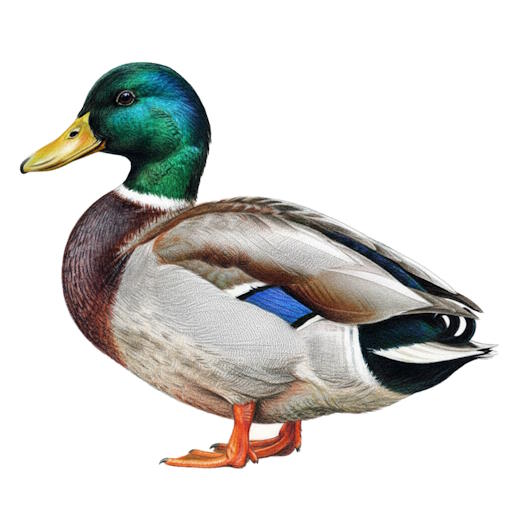
Mallard Duck
Classification
Aves > Anseriformes > Anatidae > Anas > A. platyrhynchos
Native To
Conservation Status
Average Height
1.5 - 2 feet
(0.4 - 0.6 m)
Average Weight
2 - 4 lbs
(0.9 - 1.8 kg)
Average Life Span
5 - 10 years
Gestation Period
28 days
Did You Know?
The Mallard Duck is the ancestor of nearly all domestic duck breeds.
Male Mallard Ducks have a distinctive iridescent green head, a white neck ring, and a chestnut breast.
Mallard Ducks are dabbling ducks, meaning they feed by tipping upside down in the water to reach aquatic vegetation and insects, rather than diving.
They are found in a wide variety of habitats across the Northern Hemisphere, including ponds, lakes, rivers, and even urban parks.
Female Mallard Ducks lay between 8 and 13 eggs, and the ducklings are able to swim and feed themselves shortly after hatching.
Photo Gallery
No images provided yet. Be the first to upload one!